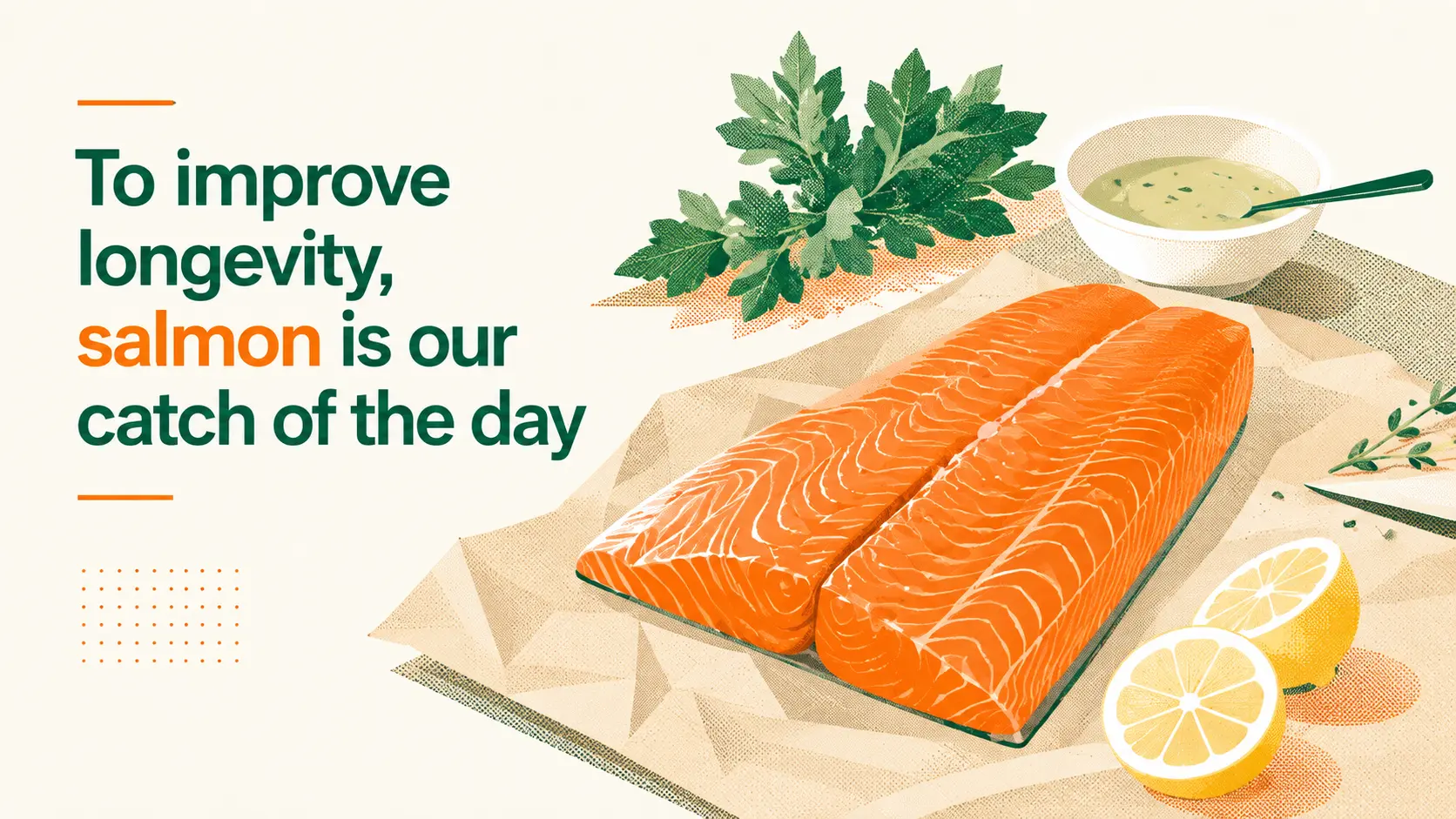
Fishing for the perfect meal to support your longevity and recovery? Salmon might be the right catch. According to “Benefits of Salmon: Nutrition, Types, Cooking Tips, and Recipe Ideas,” a 3-ounce cooked serving of salmon delivers about 24 grams of protein for 200 calories, plus omega-3s, vitamin B12, vitamin D, and selenium. That nutrient mix may explain why salmon keeps coming up in conversations about aging well. “Biological Aging May Be Slowed by This Food” points to omega-3s as a possible buffer against chronic inflammation, which researchers associate with frailty and age-related disease. Some studies have also linked higher omega-3 levels to slower telomere shortening, and the type known as DHA (docosahexaenoic acid) specifically may help support brain health as natural DHA levels decline with age. Salmon’s vitamin D content adds another layer, potentially supporting muscle protein synthesis and bone strength as we get older. None of this works in isolation, though. As we noted in “Boost your longevity with kale,” the habits tied to long-lived populations tend to center on overall eating patterns rather than any single ingredient. Salmon fits naturally into that Mediterranean-style approach alongside seasonal vegetables and unprocessed foods, which may matter more for longevity than chasing one miracle food. If you’re looking for a low-effort entry point, baking a fillet with olive oil, salt, and pepper covers the basics, and leftovers hold up well in a grain bowl the next day.
#GillToLive