How to get started with rucking and weighted vests
If you know your Greek mythology, you’ll remember Zeus condemned Atlas to hold the weight of the world on his shoulders. Talk about a high-stress position. It probably led to…

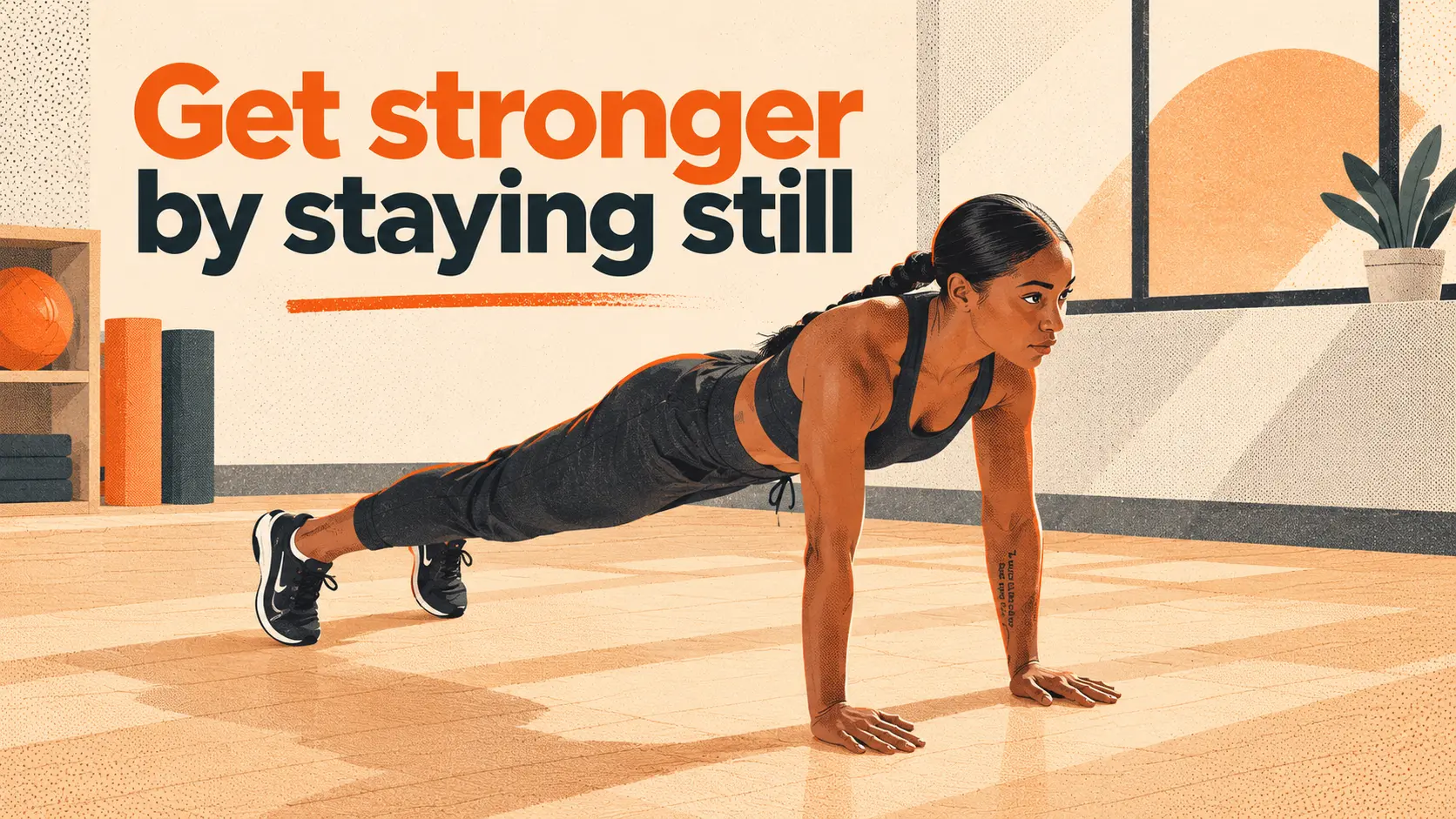
Runners spend a lot of time trying to move faster, so there’s something appealing about strength work that asks you to stay put. According to “The Anti-Movement Core Routine Every Runner Needs,” a 12-week study found that both dynamic and anti-movement core programs improved neuromuscular efficiency, but they saw greater gains in the anti-movement group, especially in the deep muscles that stabilize the spine before your limbs move. That’s important for runners because excess trunk motion can hurt running economy and increase impact forces. The article recommends training your core to resist movement with front planks, bridge holds, side planks, and Pallof presses. A related video from @doctor_evans_running points to another study in trained runners that compared traditional bodyweight strength work, plyometrics, and max-intent isometrics. If you need a reminder, max-intent isometrics are stationary pushing and pulling efforts like a leg press done as hard as you can for a few seconds. After the isometric protocol, runners averaged 18 seconds faster over a 2.4K time trial, compared with 14 seconds after plyometrics, and they also produced higher peak forces. The protocol itself was quick and easy, consisting of three sets of two-second maximal pulls for a quarter squat and calf raise. “Can Isometric Training Increase Strength?” helps explain the appeal. Isometrics can recruit lots of motor units, build force at specific joint angles, and place relatively little stress on joints because they require essentially no range of motion. That helps develop the stability and stiffness that can improve your running efficiency. Additionally, lower-effort isometrics are especially useful in rehab settings, since they allow you to train in a fixed position and range of motion.
#HoldYourGround