Five resolutions for a better marathon training cycle
A new marathon training block is a chance to make some promises to yourself – preferably ones you can still keep at mile 22. In “5 Marathon Training Resolutions Coaches…

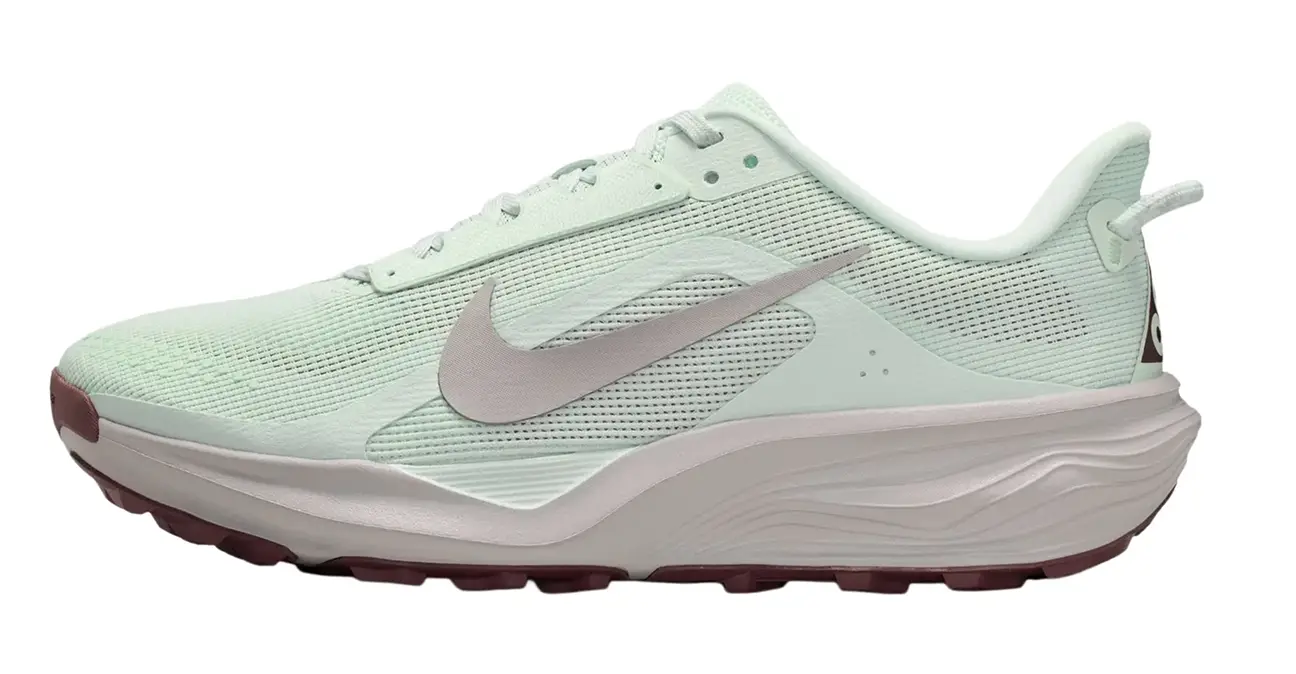
Nike has updated and improved the ACG Pegasus Trail as a smooth-riding crossover shoe for mild to moderate trails.
If you’ve spent years logging miles on pavement and have been eyeing the trails with curiosity but a little bit of dread, the Nike ACG Pegasus Trail is the shoe that was essentially designed for you. This is not a hardcore trail shoe and it won’t force you onto remote mountain ridges, but it doesn’t pretend to be a shoe that is wild and aggressive.
What it is—and what Nike has steadily refined over six iterations of the Peg Trail—is one of the most capable and comfortable, smooth-riding road-to-trail shoes on the market. It’s an ideal shoe if you’re new to trail running and for runners who want to move fluidly between mild to moderate singletrack trails, gravel roads and even sections of pavement or concrete bike paths without any setbacks.
I’ve run in just about every version of the Pegasus Trail over the years, and this ACG edition represents the best version yet because it’s one of the lightest, cushiest and smoothest-riding models. The updates are incremental—this is not a ground-up redesign—but they collectively add up to a shoe that finally nails the road-to-trail crossover brief that the Peg Trail has been chasing all along.
Price: $155 (women’s / men’s)
Approximate Weights: 9.0 oz (women’s 8); 10.1 oz. (men’s 9)
Heel-Toe Offset: 8mm; 39mm (heel), 31mm (forefoot)
What’s New: Nike relaunched the Pegasus Trail line under its ACG (All Conditions Gear) banner over the winter, and along with the new branding comes some meaningful upgrades. The midsole gets more ReactX foam volume, bumping the stack height to 39mm at the heel and 31mm at the forefoot with a more trail-friendly 8mm drop—down from 9.5mm on the Peg Trail 5. The outsole gets Nike’s updated ATC 2.0 rubber compound, which it claims delivers 30 percent better wet traction while also improving abrasion resistance. Perhaps most significantly for road runners: the toe box is much wider and roomier.
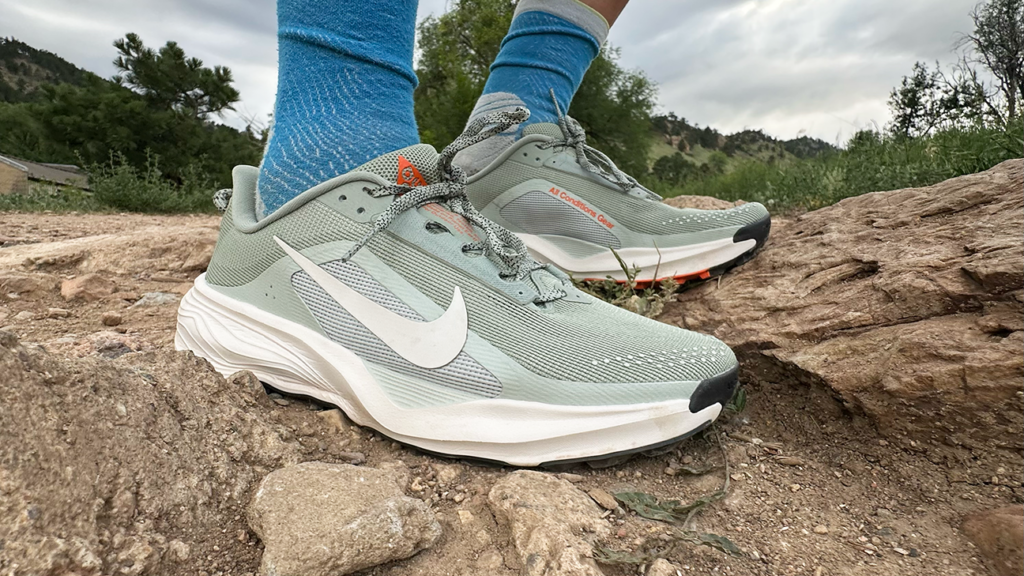
Fit/Feel/Ride: Step into the ACG Pegasus Trail and the first thing you notice is how familiar it feels—and that’s by design. It fits true to size and has a medium-volume interior with a very roomy toe box. The plush, cushioned tongue and soft engineered mesh upper have that same welcoming feel you’d expect from any Pegasus. I took a pair straight out of the box on a 7-mile trail run and had zero issues. The heel lockdown is excellent from the first stride, and the redesigned collar adapts with foot expansion rather than fighting it—no slip-on uphills, no slop on descents.
The ride is soft and semi-responsive—lively without being bouncy, protective without feeling mushy. The ReactX foam delivers a smooth heel-to-toe roll that road runners will immediately recognize and appreciate. It’s not the kind of snappy, propulsive energy return you get from a carbon-plated racer, and it’s not the marshmallow plush of a max-cushion trainer. It sits in a sweet spot in between: cushioned enough for daily miles on a variety of surfaces, responsive enough to let you push the pace on a dirt road or a gentle trail without feeling like you’re slogging.
Flexibility is worth noting here. The ACG Pegasus Trail has moderate longitudinal stiffness—not a plank, not a wet noodle—which lets the shoe move naturally with your foot on uneven terrain. Road runners who are used to flexible, forgiving shoes will feel right at home. And that wider toe box, measured at 76mm at the forefoot—notably wider than the most Nike shoes—gives your toes room to splay and spread the way they want to on varied ground. If you’ve ever felt squeezed in a trail shoe that felt like it was designed for a foot-shaped pencil, this is the antidote.
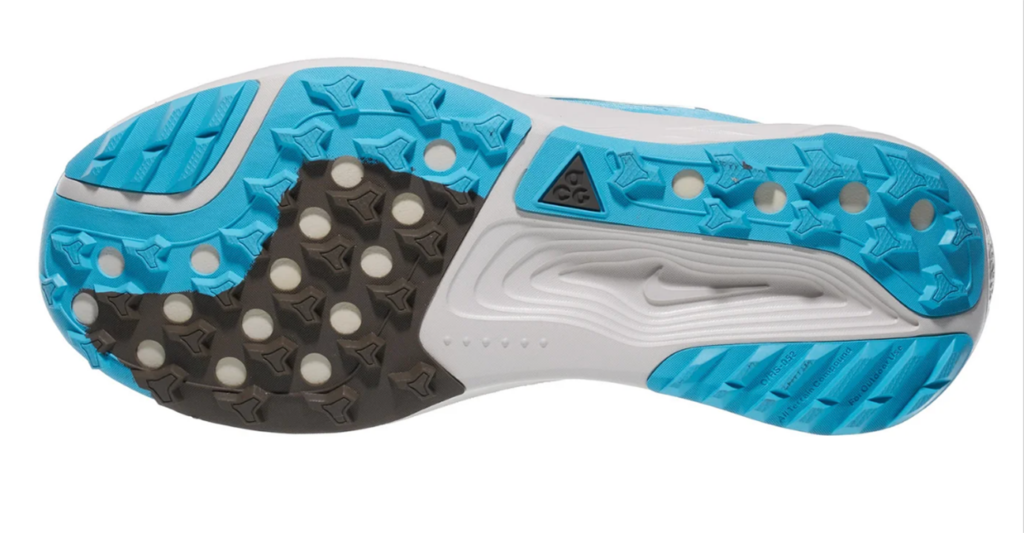
Why It’s Great: The ACG Pegasus Trail earns its keep most specifically for runners who don’t fit neatly into the road runner box or the trail runner box—which is most of us. If your weekly mileage includes some pavement, some gravel, and some easy dirt trails, you could do every mile of it in this shoe without compromise. The ATC 2.0 rubber outsole handles wet grass, slick rock, and damp dirt trails with credible grip, and on smoother surfaces it’s quiet and efficient underfoot.
Don’t ask it to handle genuinely technical, rocky terrain—the 3.5mm lugs aren’t deep enough for that job, and the platform is too soft for aggressive off-camber work. But it really delivers for the door-to-trail runner who wants one versatile shoe that works almost everywhere.
Why You’ll Love It: The sweet spot for this shoe is the road runner who has been curious about trails but wary of sacrificing the softness and flexibility of their everyday trainer for the stiff, knobby feel of a dedicated trail shoe. The ACG Pegasus Trail doesn’t make you choose. It runs like a road shoe that happens to have trail capabilities baked in—not a trail shoe you’re tolerating on pavement. That’s a meaningful distinction, and it’s what makes this the best first trail shoe for road runners who don’t want to feel like a beginner the moment they step off the asphalt.
Why You Might Not Like It: The plush ReactX midsole is exactly what road runners love about this shoe—but on technical terrain, that same softness compromises lateral stability. If you’re navigating rocks, roots, or off-camber sections at any real clip, the platform can feel a little unsettled underfoot. Also, because this shoe doesn’t have any kind of plate (propulsion or a protective rock plate) so you, at times, you can sometimes feel rocks and roots poking through the bottom of your feet on more technical terrain.
Pro: The wider toe box and medium-volume interior is gret but not sloppy—road runners with wider feet will immediately feel the difference, and the natural toe splay on longer efforts is a game-changer.
Con: The grip of the Nike ACG Pegasus Trail is better than before, but the ATC 2.0 outsole still can’t keep pace with Vibram Megagrip on genuinely technical or muddy terrain. If your trails get burly, you’ll want a different shoe. Plus, it’s heavier than most dedicated trail racing shoes and even some daily trainers. Runners who are weight-conscious or who want to move fast on trails will feel that extra ounce or two over the long haul.
Contributing editor Brian Metzler is the Content Director for UltraSignup.com. He has wear-tested more than 2,000 running shoes and is the author of “Kicksology: The Hype, Science, Culture and Cool of Running Shoes” (2019) and “Trail Running Illustrated” (2021). He has raced just about every distance from 100 meters to 100 miles, but he’s most eager to share stories about his experiences pack burro racing in Colorado and riding trains to run trails in Chamonix, France.
RELATED: The Adidas Hyperboost Edge Pairs High-Stack Cushion with A Lively Vibe
RELATED: The Saucony Triumph 24 is a Fun, Light and Springy Training Wonder
RELATED: The On LightSpray Cloudmonster 3 Hyper is an Enticing Laceless Trainer
RELATED: Mount to Coast C1 is the Speedy New Kid on the Block
RELATED: The 7 Best Nike Running Shoes on Sale Right Now
RELATED: New Kid on the Block: The Kiprun Kipride is a Soft, Responsive, and Stable Everyday Trainer
RELATED: NOBULL’s Journey 2 is a Versatile Everyday Trainer that Pairs Performance and Casual Appeal
RELATED: Nike Pegasus 42 Continues its Workhorse Legacy with a More Responsive Ride