Do you prefer to train together or alone?
They say if you want to go fast, go alone, and if you want to go far, go together. For runners, both solo and group training has its pros and…

The Ozlo Sleepbuds 2 are among the best sleep earbuds I’ve tested for side sleepers and people bothered by nighttime noise. They improve on the original with 14-hour battery life, better connectivity, stronger sound, and expanded sleep tracking, though the $279 price remains a significant investment.
Pros
Cons
SMM Readers can save $20 off MSRP price using code “SMM” at checkout.
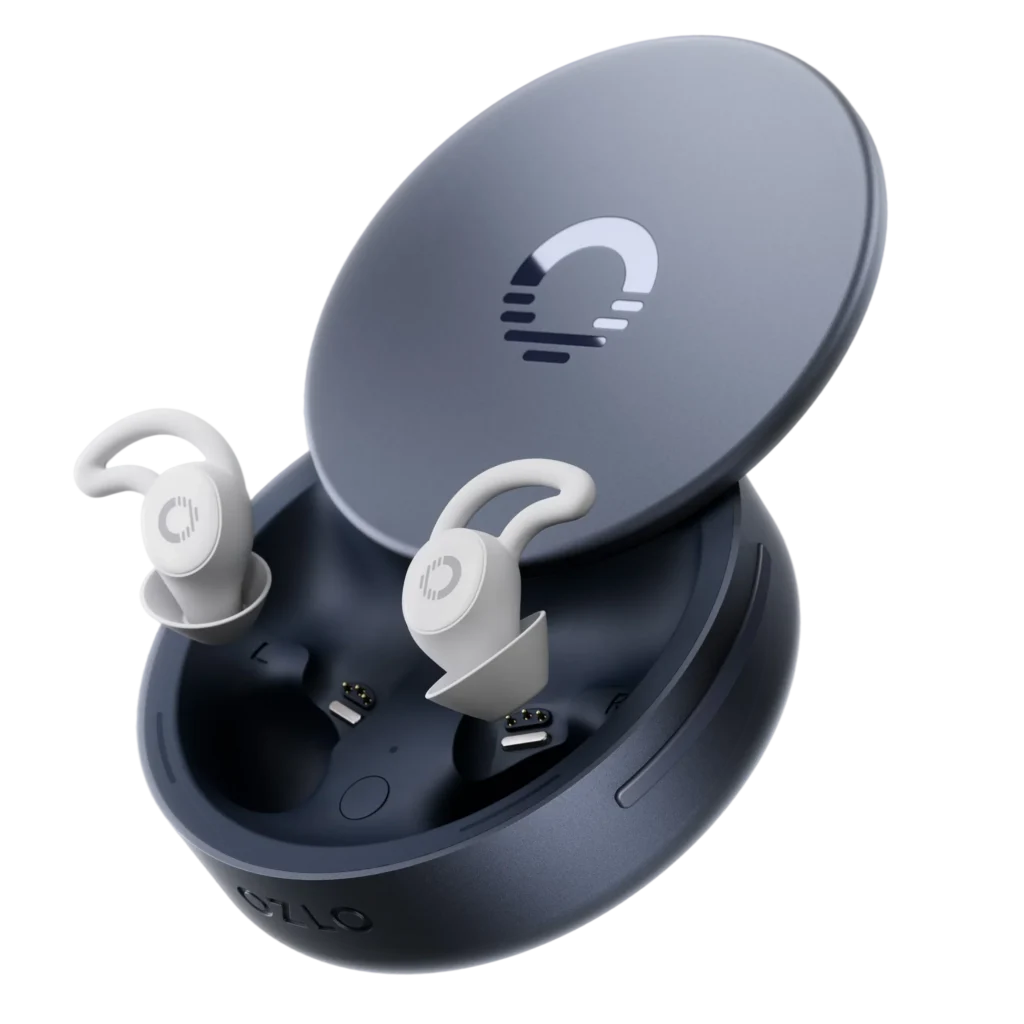
The Ozlo Sleepbuds 2 are low-profile sleep earbuds designed to block and mask disruptive noise while remaining comfortable enough to wear overnight.
For runners, good sleep is a major part of recovery. A loud hotel, snoring partner, barking dog, or early-morning traffic can easily interfere with that process, especially before a race.
I came away impressed when I reviewed the original Ozlo Sleepbuds. They delivered on the three things that mattered most: comfort, noise attenuation, and all-night battery life.
The Sleepbuds 2 preserve those strengths while improving setup, connectivity, battery life, sound, and controls. Ozlo also improved their sleep tracking and sensors that measure noise, light, and temperature around your bed.
My impression is that Ozlo listened carefully to feedback. The Sleepbuds 2 feel like a refined version of a product that was already among the best options for noise-sensitive sleepers.
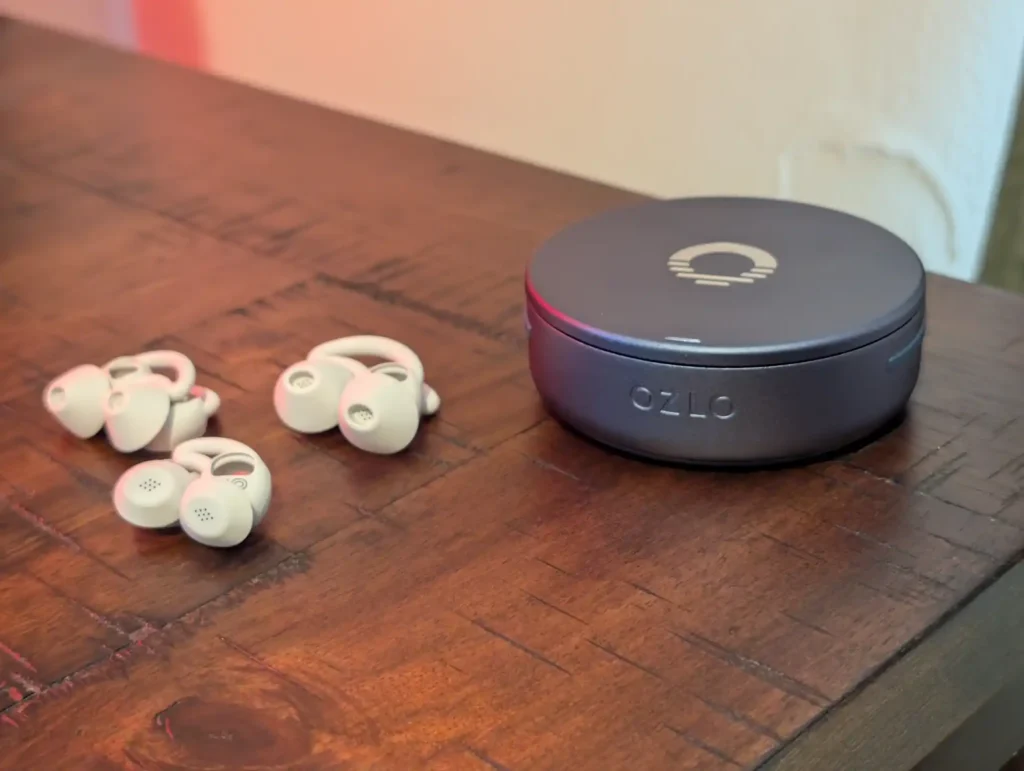
Inside the box, you get the Sleepbuds 2, Smart Case, four interchangeable silicone tip sizes, USB-C charging cable, quick-start guide, and manual.
Larger tips may create a tighter seal, while smaller ones can feel more comfortable when lying on your side. I chose size 1 as a good balance between noise blocking and a lower-profile fit.
Setup in the app now includes a helpful video showing how to swap the silicone covers. The process is simple, and I recommend trying multiple sizes to find the right option for you.
Setup felt noticeably faster and easier than it did with the first version.
The buds paired with my phone quickly, and within a few minutes, I had selected my preferences and chosen a sleep sound. My original Sleepbuds required a reboot after their first software update. This time, everything worked properly right out of the box.
I chose “Soar” again, a steady sound similar to the low rumble of an airplane cabin. I set it to about 25% volume, compared with 35% on the originals, since the Sleepbuds 2 can get louder.
The buds offer several sleep modes that determine how streamed audio and built-in masking sounds behave. You can listen to music, podcasts, audiobooks, or meditation before switching to a downloaded sleep sound later.
The in-ear alarm is still there as well. You can choose the sound, volume, time, and repeat schedule, which is useful for anyone who shares a bed and does not want to wake their partner.
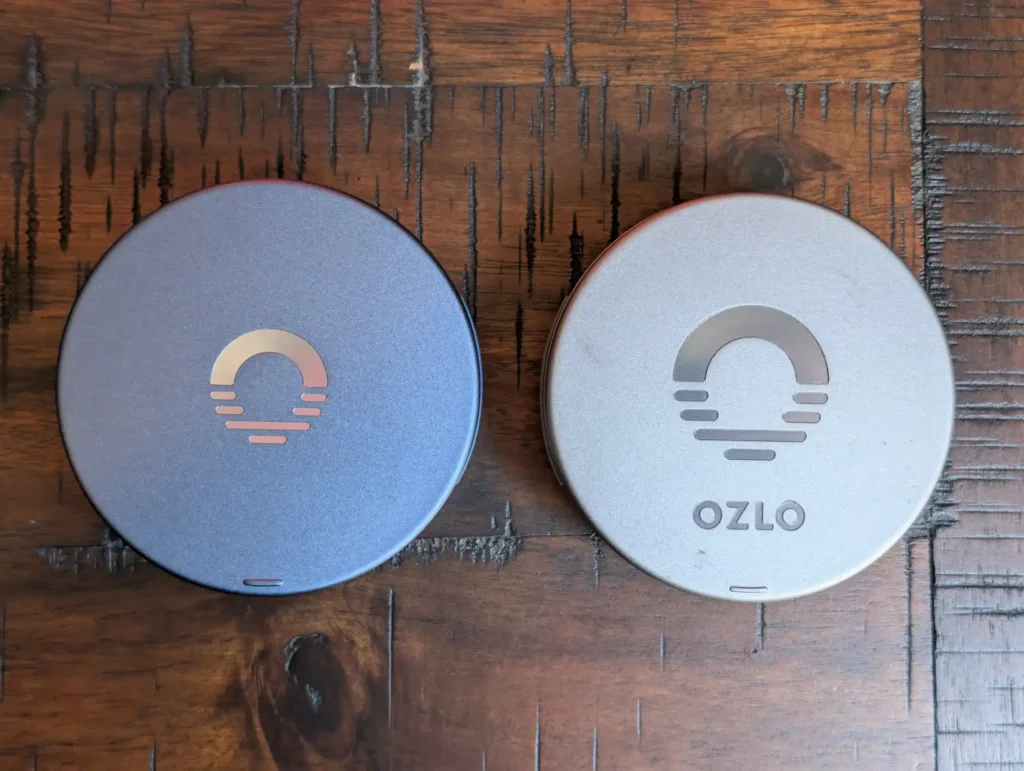
The Sleepbuds 2 are roughly the same size as the originals, which is good news. The first version was already among the smallest wireless earbuds I had used, and Ozlo managed to add features and battery life without making them bulkier.
The buds sit low enough in the ear that they do not create the same concentrated pressure as conventional earbuds against a pillow. Smaller silicone covers make them even less noticeable.
Ozlo made minor adjustments to the tips for a more secure and comfortable fit. In my initial testing, I found them to be comfortable even when lying on my side.
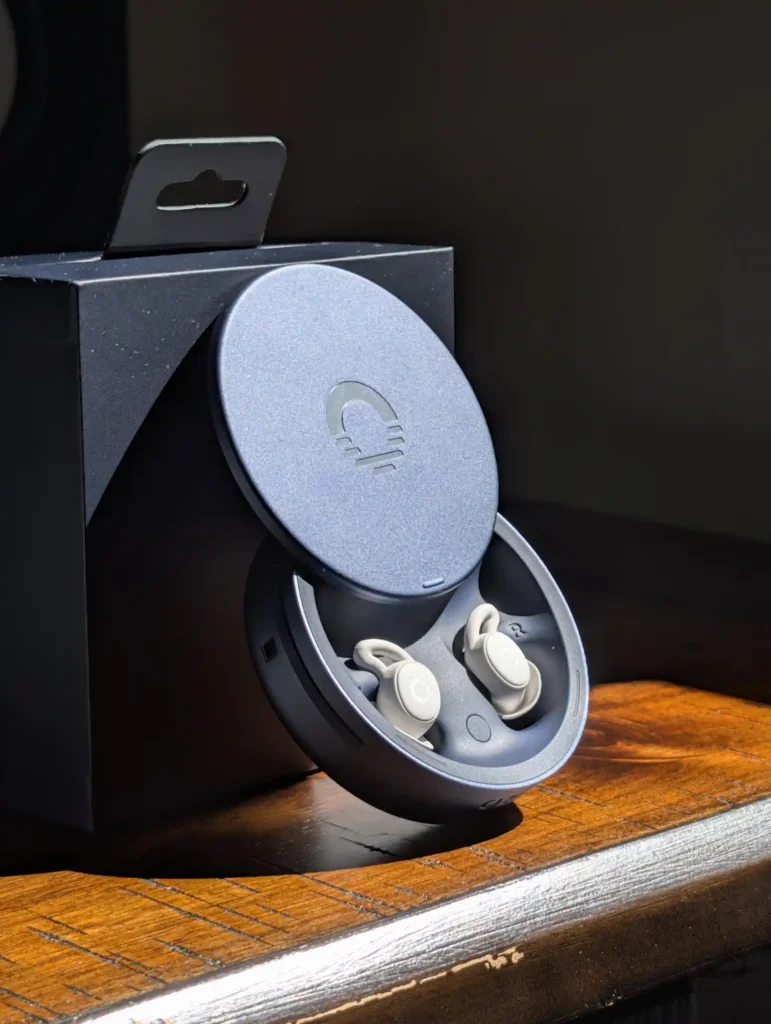
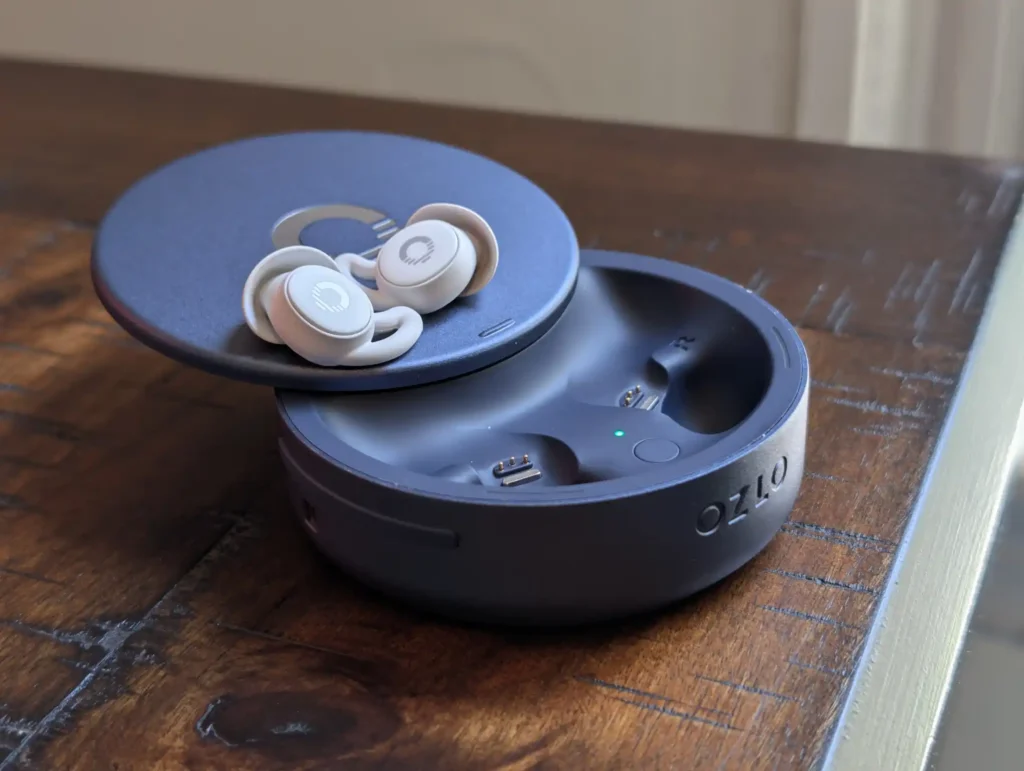
The Smart Case is also similar in size and construction to the original version. It feels durable and premium, and the new midnight-blue color suits the product well. Smaller branding gives it a cleaner look than the original.
The new physical Smart Case button lets you start a sleep sound, pause audio, and snooze an alarm without reaching for your phone. That’s an important change for anyone looking to avoid staring at a bright screen before bed.
The refreshed app includes clearer charging indicators and controls for alarms, sleep modes, sound profiles, audio tuning, and sleep reports.
After wearing the Sleepbuds 2 for several full nights, I found the buds to be quite comfortable. They remained secure in my ears, and apart from a few brief moments, I didn’t wake because of pressure or the sensation of having something in my ears.
The Sleepbuds 2 use motion sensors to estimate sleep duration, efficiency, consistency, sleep stages, and wake periods. Sensors in the case also monitor noise, light, and temperature.
The app estimated that I was in bed about nine hours, and was asleep for about 75% of that time. That feels pretty consistent with my recollection, so I’m happy with the quality of tracking so far.
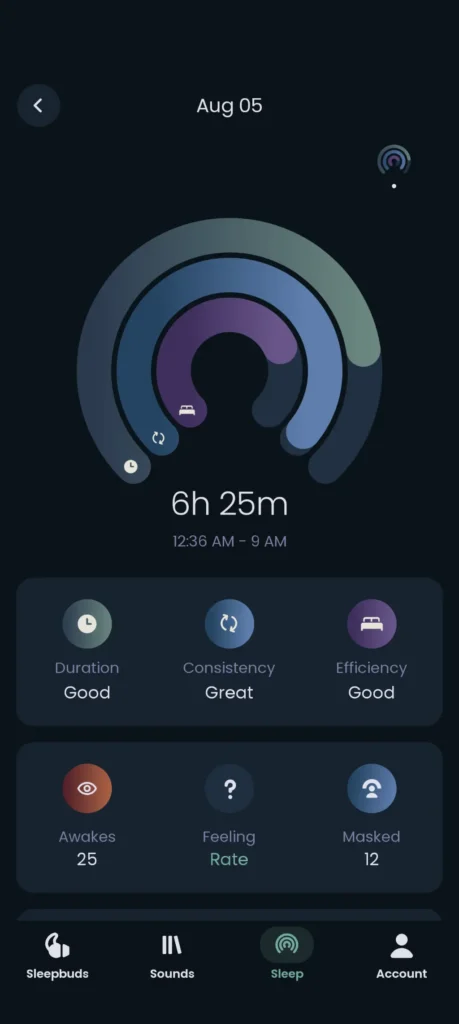
I found the information about noise, light, and temperature most useful because these buds are largely about controlling your sleep environment. It makes sense that their tracking metrics focus on these external factors, and pairing them with a device like a smart watch would be a solid way to capture a full suite of data if you’re looking to optimize your sleep.
These reports may provide useful guidance, though I would treat them as estimates rather than medical-grade data.
The Sleepbuds 2 continue to use passive noise blocking and sound masking rather than Active Noise Cancellation.
ANC requires extra processing and battery power, which would make it difficult to preserve the small size and all-night battery life. Ozlo instead relies on a snug silicone seal and masking sounds to cover what remains. For their intended purpose, I do not see the lack of ANC as a major problem.
The physical design appears very similar to the original, so passive attenuation should also be comparable. SoundGuys’ testing of the first model showed its strongest reduction above 1 kHz, with less isolation in the low end. Passive isolation works best against higher-frequency sounds such as conversation, while deep rumbles are harder to block. Choosing a low-frequency masking sound can help cover them. “Soar” works well for me for that reason.
For masking sounds at low or moderate volume, the buds sound very good.
They can also stream music, podcasts, audiobooks, meditation, and other audio. Ozlo has made those secondary uses more practical.
The most obvious improvement over version 1 is greater maximum volume. The original Sleepbuds could feel limited with quiet recordings or in noisy environments. The Sleepbuds 2 provide more headroom.
Bass extension has also improved. Sub-bass is easier to hear, giving ambient recordings and music a fuller foundation.
There are a few compromises. The high end lacks some clarity and detail, and the new model sounds slightly less punchy and defined through the mids than the original. Vocals are clear enough for podcasts and audiobooks, though conventional premium earbuds will offer more detail and separation for music.
The app includes several audio profiles, including Balanced, Spoken Word, Focus, and Airplane.
Overall, the stronger bass and added volume make Sleepbuds 2 more versatile. They’re better suited to ambient sound and spoken audio than critical music listening.
Ozlo increased advertised battery life from 10 hours to 14, and I noticed this improvement in my own testing. After a full night’s use—about eight hours of sleep—my buds usually end up in the 52% to 48% battery range by morning.
The original already covered a typical night. The extra four hours provide more flexibility for long sleepers, travel, listening before bed, and nights when you begin without a full charge.
It may also improve long-term usefulness. As batteries lose capacity over time, starting from 14 hours gives the product more room before degradation becomes noticeable.
The Smart Case provides roughly two to three additional charges.
Connectivity has also improved in my early use. Pairing is faster, the app recognizes the buds more quickly, and the connection has been more stable than when I first tested the originals.
Just like the original version, the Sleepbuds 2 are a premium product built for a specific problem.
At launch, the Sleepbuds 2 have an MSRP of $279. That is expensive for earbuds, though it is around $70 less than the $350 list price attached to the originals when I reviewed them.
For someone whose sleep is regularly disrupted by noise, the Sleepbuds 2 offer even more value this time around. Better sleep in hotels, at home, or before a race can have a meaningful effect on how you feel and perform the next day.
The Sleepbuds 2 retain the feature that made the originals stand out: a low-profile design that works for side sleepers. Longer battery life, better connectivity, higher volume, stronger bass, physical case controls, and expanded sleep features make them a more complete product.
They are still specialized. There is no ANC, music quality cannot match conventional premium earbuds, and buyers who already sleep well in a quiet environment may gain little from them.
A cheap pair of foam earplugs could be worth testing for anyone unsure whether noise blocking will help. People who already know noise is the problem will find the Sleepbuds 2 to be one of the most polished options available.
For side sleepers, frequent travelers, and people who struggle with nighttime noise, I highly recommend them.
SHOP NOW – SMM Readers get $20 Off MSRP with code “SMM”
See our original reviews of the Ozlo Sleepbuds from Sean and Rebecca.