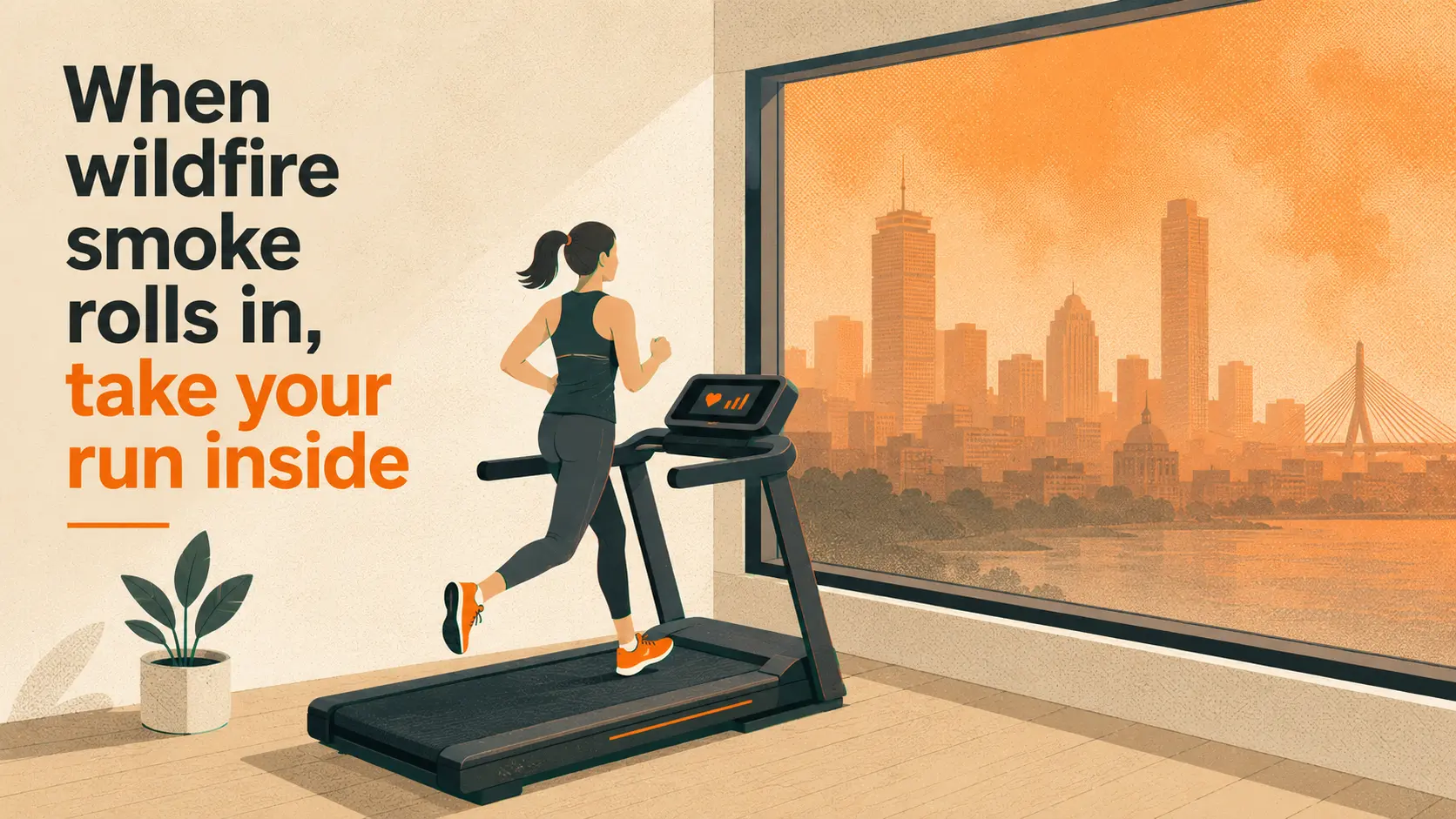
The good news for our neighbors to the north is that Canada now has an export that avoids tariffs. The bad news is that the new product is much less appealing than maple syrup or snowshoes: “Maps show wildfire smoke forecast, air quality alerts due to pollution from Canadian, Minnesota fires.” More than 100 wildfires are burning across Canada, along with fires in northern Minnesota. Those blazes sent heavy smoke over much of the Midwest and Northeast this week, triggering air-quality alerts and pushing pollution to hazardous levels in some areas. That creates an especially nasty double feature for runners: high temperatures plus fine particulate matter, or PM2.5, which can travel into your lungs and bloodstream. As we explained last May in: “Running safely through heat waves and bad air,” your response should depend on the Air Quality Index listed on your smartphone. Green conditions from 0 to 50 are generally safe, while an orange reading from 101 to 150 is a good reason to reduce your intensity or swap the run for a walk; sensitive athletes should remain indoors. Once the AQI reaches red, move the workout inside entirely. Slowing down can help, since hard running increases the volume of polluted air you inhale, often through your mouth rather than your nose. Symptoms like coughing, headaches, dizziness and shortness of breath are obvious warning signs, but feeling fine doesn’t guarantee that your lungs are avoiding harm. “Poor air quality: why running isn’t worth the risk” suggests you skip the outdoor miles and use a treadmill, stationary bike, pool or elliptical instead.
#SmokeOnTheTreadmill