The Refined Saucony Endorphin Speed 6 Blends a Bouncy Vibe with Comfort and Versatility
The Saucony Endorphin Speed 6 is a semi-firm, bouncy and versatile daily training shoe.


In case you missed them, we’re bringing you the most-loved stories from the last month. It’s our way of making sure that you don’t miss any of our best content. Friends don’t let friends skip important running advice. Cheers!
Has the “runching” revolution transformed your running schedule for the better? According to “A Workout Hidden in the Middle of the Workday,” this combination of running and lunching is trending in the hybrid work era, with more runners squeezing in a session between noon and 2 p.m. than ever before. The appeal is simple: for parents juggling childcare schedules, night-shift workers, or anyone who can’t stomach a 5 a.m. alarm, a midday run offers a way to train without sacrificing sleep or safety. The article notes that lunchtime workouts are ideally timed, since you’ve digested breakfast, your caffeine has kicked in, and lunch is ready when you finish. There are a few complications to consider, like office hygiene, but signing up for a nearby gym membership can provide access to a shower if needed. There’s also the option of going for a long walk instead to keep your sweat levels down. If you’re looking to maximize your runch with a high-intensity session, you can “Try this VO2 max-boosting interval session on your lunch hour.” It offers an effective framework known as Billat’s 30-30, which alternates 30 seconds of hard running at VO2 max pace with 30 seconds of very easy running, capitalizing on the lag effect where your oxygen consumption stays elevated even when you slow down. You can complete the entire session in under an hour, including warmup and cooldown, making it perfect for squeezing quality training into a tight schedule.
#DineAndDash
Running with stiff hips is a bit like racing a car with the parking brake on. It doesn’t matter how powerful the engine is (or your legs are) if they can’t move freely. So that’s why we’re sharing: “Understanding and Improving Hip Efficiency, Part 1.” Physical therapist and ultrarunner Joe Uhan explains that the real barrier to smooth movement is often a lack of hip efficiency. He compares the ball-and-socket joint to a teacup sitting on a saucer; if that cup slips off-center due to poor muscle coordination, you end up with a tug-of-war among the 21 muscles crossing the joint. This creates a vicious cycle of compensation and chronic stiffness, so he recommends myofascial release to get things back on-axis in the socket. Once you have things aligned, you need the horsepower to maintain that position, and “Essential Hip-Strengthening Exercises for Runners” suggests nine moves designed to boost stability. Their list includes specific drills like the Heel Activator to retrain foot strike, the Monster Walk for core engagement, and the Heel Drop + Hip Hike to target the abductors – crucial if you ever notice your knees knocking together in race photos. If you prefer a visual guide to loosening up, check out Greg McMillan’s video “Awesome (and Quick!) Hip Loosening Routine for Runners” which features leg circles, knee hugs, cross legs sitting, and pigeon pose. Since his free 5k Ebook download was a hit in our recent issue, we should mention he’s also offering a “Free Marathon Training Ebook” to help you nail your pacing and fueling at longer distances.
#HipHipHooray
Lots of muscles in the human body come in antagonistic pairs. In other words, each one needs to work with a partner to move back and forth, and balancing them out is key. Why does that matter for runners? According to “The Reason Your Knees Hurt Has Nothing to Do With Your Knees,” when quads dominate, they create a “braking” stride where the foot lands too far in front of the body. This moves the knee to absorb excessive load while the quads burn out faster from doing both propulsion and control work. To fix this, the goal is to balance quads against your glutes – getting power from the hips pushing the ground away behind you. You can do that by incorporating exercises like single-leg glute bridges and deadlifts into your routine. If you are looking for a more unconventional method to balance things out, “Quad Dominant Running Explained + 4 Ways To Fix It” suggests running backwards for 20 to 50 meters. Before you start walking in reverse, you might want to confirm you actually have this imbalance by checking “What Does It Mean To Be a Quad-Dominant Runner — And What Are the Risks?” Physical therapist Grayson Wickham recommends a simple bodyweight squat test: if your heels come off the ground as you lower down, or your knees dive forward without your hips moving back, your quads may be doing too much of the heavy lifting. Correcting these imbalances takes time, but engaging your posterior chain could be the key to protecting your knees, shins, and ankles while you run.
#BringingUpTheRear
For many of us, just remembering why we entered a room is a win for our cognitive health. But for a select few “super-agers,” the bar is a little higher. A study published in the journal Nature offers a look at what might be going on inside these exceptionally sharp minds. The NYT provides the details in: “Super-Agers’ Brains Have a Special Ability, New Study Suggests,” Researchers examined donated brain tissue and found that so-called super-agers had roughly twice as many new neurons as older adults with normal memory for their age, and about 2.5 times more than people with Alzheimer’s disease. The focus was on the hippocampus, the brain region central to learning and memory, and the suspected generator of new neurons. This process, called neurogenesis, remains hotly debated in neuroscience, but the study’s lead researcher described the findings as “biological proof that the aging brain is plastic” well into a person’s 80s. So what can the rest of us do to acquire a bit of this neuroplasticity? Quite a lot, according to: “Not genetics: The common trait of clear-minded 80-year-olds.” The story identifies nine daily habits shared by people who maintain sharp cognition late in life. These include reading challenging material for at least 20 minutes a day, practicing deep focus without distractions, maintaining consistent sleep and wake times, intentionally breaking routine, and nurturing meaningful social connections. Even small daily acts of learning – like a new word or fact – may help preserve the brain’s ability to form new neural connections over time. You could start today, and your future self will probably remember that you did.
#ThanksForTheMemories
Somewhere amidst the carbon plate revolution and a recovery footwear market projected to hit $18 billion this year, things have gotten a little complicated. According to: “Do Super Shoes Prevent Injuries? Experts Share Their Findings,” the science on whether super shoes protect you from injury is a mixed bag. On one hand, a study presented in a biomechanics symposium last summer found that runners in Nike Alphafly 3s had a 53% lower injury rate than those in traditional shoes. Although, that study was sponsored by Nike, so we may have to take the results with a grain of salt. At the same conference, a separate study found no significant difference in injury rates between super shoe users and non-users, even though the super shoe group ran 37% more distance. Experts warn that modern cushioning and carbon plates don’t eliminate impact forces completely – they mostly just redirect them. And with super shoes, those redirections are larger than ever. One expert noted that the rigid carbon plates increase stress on the metatarsals, which can travel through the foot into the shin and calf. If you do wear super shoes, consider phasing in new pairs gradually rather than making sudden switches. As for what you slip on afterward, “Do Recovery Shoes Actually Work?” finds a similar pattern. There are manufacturer-funded studies and limited independent research, but plenty of anecdotal support for reduced soreness and fatigue. They work by using features like a wide toe box, extra cushioning, and a curved rocker bottom to allow the foot to spread out and relax as you walk. If you’re curious to test some out, recovery footwear brand OOFOS has some great deals going on for options like the Women’s OOlala sandal and Men’s OOahh sports slide.
#SoleSearching
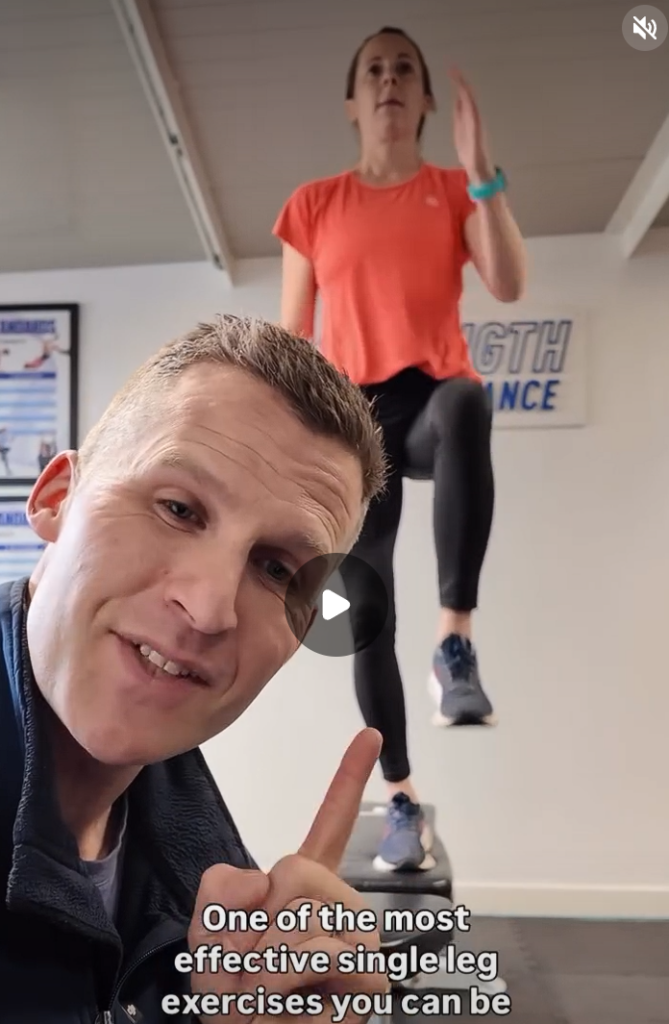
Do you want to get twice as much benefit from drills and strength training? @strengthforendurance just put out a clip explaining how. They note that for single leg exercises like the lateral step-down, it can be tempting to rush through the eccentric portion of the move. Runners may think faster is better, but doing a slow, controlled descent can help to engage the core and stabilizer muscles which are vital for absorbing impact and lowering injury risk. Check out the clip to see how to perform this move the right way.