The Refined Saucony Endorphin Speed 6 Blends a Bouncy Vibe with Comfort and Versatility
The Saucony Endorphin Speed 6 is a semi-firm, bouncy and versatile daily training shoe.


The Tracksmith Eliot Ryder is a premium max-cushioned daily trainer that delivers a smooth, springy and stable ride.
When you open the box of the Tracksmith Eliot Ryder, you immediately get that Tracksmith vibe, and it sets the tone for what this new premium max-cushioned everyday trainer is all about.
On the interior of the burgundy-colored box with gold lettering, there’s an image of a pastoral scene: a dirt road engulfed in fall foliage. It’s presumably somewhere in New England, given Tracksmith’s propensity for identifying with the region. There’s no runner in the scene, but before I even pulled back the paper and unwrapped the shoe, I envisioned myself on that rolling road, logging miles on a long weekend run.
The Eliot Ryder is the fourth running shoe Tracksmith has launched, following the original Eliot Runner everyday trainer, the Eliot Racer carbon-plated super shoe, and the Eliot Range trail running shoe. I’ve run extensive miles in each of those, and I’m here to say the Eliot Ryder is the best of the bunch. The other three are good shoes, and I’ve liked each one a little to a lot, but the Eliot Ryder was a winner shortly after I pulled it out of that inspiring box and found a serene scene to run in real life.
What makes it such a good shoe? It has a lot of cushioning, but it strikes the right blend of hyper-responsive cushioning, mostly contained in a thick drop-in midsole, and I wish more shoes were made that way. I’ll explain why that’s a unique element below, but what I’ll say here is that, in the 50 or so miles I’ve run in it over the past month, I’ve really appreciated the smooth, responsive, and very flowy ride of the Eliot Ryder at a variety of paces. It’s a fun shoe to run in, and, of course, it oozes Tracksmith’s signature style.
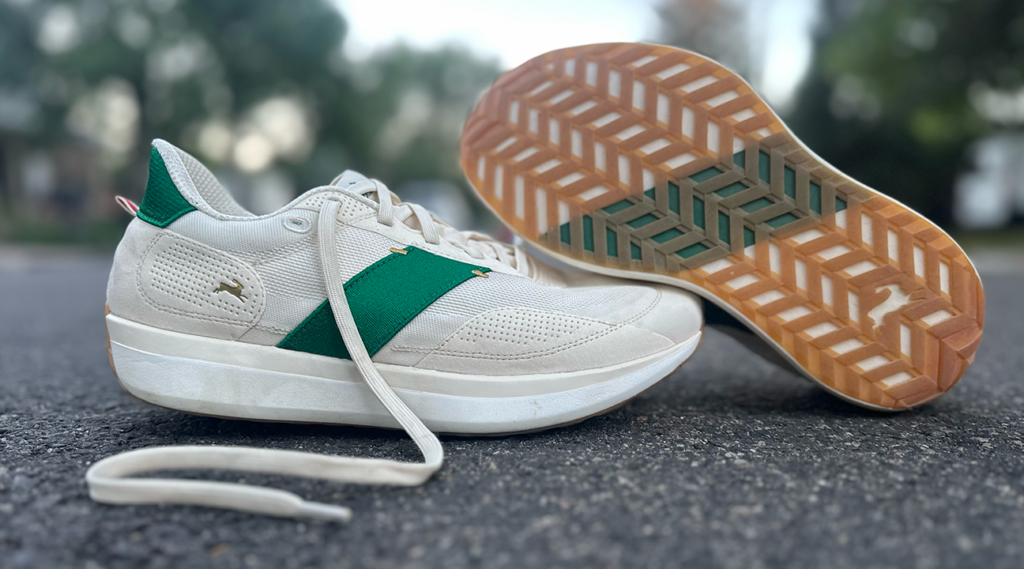
Price: $220
Approximate Weights: 7.7 oz. (women’s size 8); 9.5 oz (men’s size 9) ·
Heel-Toe Offset: 7mm; 44.5mm (heel), 37.5mm (forefoot)
What’s New: The key feature is the drop-in cushioning slab that’s built into the footbed—an ultra-responsive 25mm thick supercritical ATPU slab that Tracksmith says specs at 85 percent responsiveness. It has a rockered midsole/outsole chassis that contributes to its smooth heel to toe transitions, plus an engineered woven upper with sueded stabilizing overlays, an engineered knit padded and gusseted tongue, and a thin but durable rubber web outsole. It’s a unique collection of components that combine for a unique vibe out on the run.
Fit/Feet/Ride: The Eliot Ryder fits true to size with narrow-medium interior volume that’s snug in the heel and midfoot and slightly more spacious at the forefoot. The step-in feel is seamless and soft with just enough padding around the reinforced heel collar. The engineered woven upper does the structural work exactly where it’s needed, ensuring a secure fit and offering enough breathability. Suede stabilizing overlays across each side of the upper keep the foot anchored over the footbed, while the integrated engineered knit tongue ties it all together into a fit that leans toward accommodating over excessively locked-down.
The run is fun and responsive, but it is not excessively bouncy and instead more of an energized rolling sensation. The unique midsole structure provides a definitive springiness in every stride, but also plenty of inherent stability. That all adds up to a shoe that has long-haul comfort and responsiveness and can pick up the space slightly on the back half of a long run. You feel the springy pop at all paces, but it has a limited top-end speed, though, so it’s not going to be as ideal for speedier workouts.
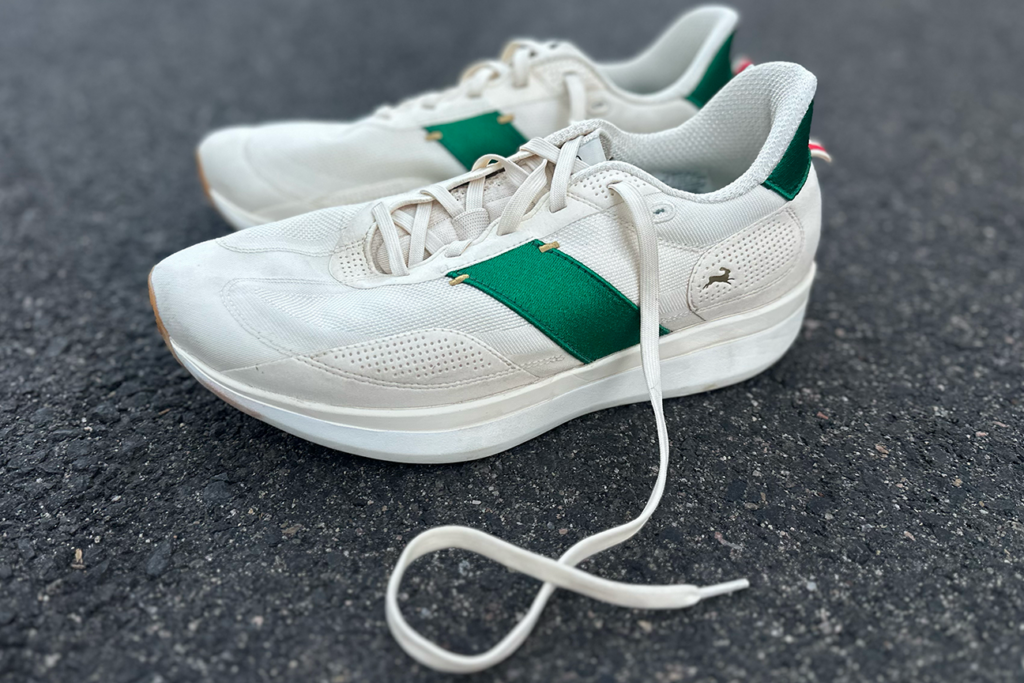
Why It’s Great: Just about every max-cushioned shoe on the market right now wants to sell you the same story: bigger stack, bigger claims, and, yes, a bigger price tag, too. The Tracksmith Eliot Ryder tells a bit of a different story. With its high stack height, it aligns with the trend of oversized daily trainers. But what’s different is the unique 25mm drop-in midsole that sits inside and above the shell of the shoe, which has an additional 20mm of foam in a secondary midsole.
Essentially the cushy foam is right under your foot and not restrained by a sewn-in Strobel board or mesh layer (which is below the drop-in midsole). What does that mean? It’s as if you’re standing in the foam rather than on top of it, and that distinction is what makes this shoe unique. (Only a few brands use this construction, including Tracksmith in its Eliot Racer.) Because the cushioning sits inside the upper instead of beneath it, there’s an immediate connection between foot and foam the second you step in, there is none of the usual lag or disconnect you get from a traditional stacked midsole.
Why You’ll Love It: It serves up the rare duality of being very bouncy and very stable. Max cushioning often means max compromise of stability. Many max-cush shoes are soft enough to feel plush, but also so mushy that your foot goes hunting for stability it can’t find. The Ryder’s pitch is that of a broader platform, an accommodating fit, and a supercritical stabilizing chassis that is cushy and supportive without sacrificing the bounce, support or stability.
The Eliot Ryder is a high-mileage workhorse first and foremost, built for the days when you need the legs to feel fresher at mile 18 than they did in the earlier miles. It’s a shoe built for long runs, easy runs and recovery runs rather than tempo or race-day duty. The accommodating fit and broad platform also make it a candidate for runners who’ve bounced off narrower max-stack shoes before.
Why You Might Not Like It: It’s not exceptionally light or fast. It is responsive and bouncy and can get up to tempo pace, but not much faster than that.
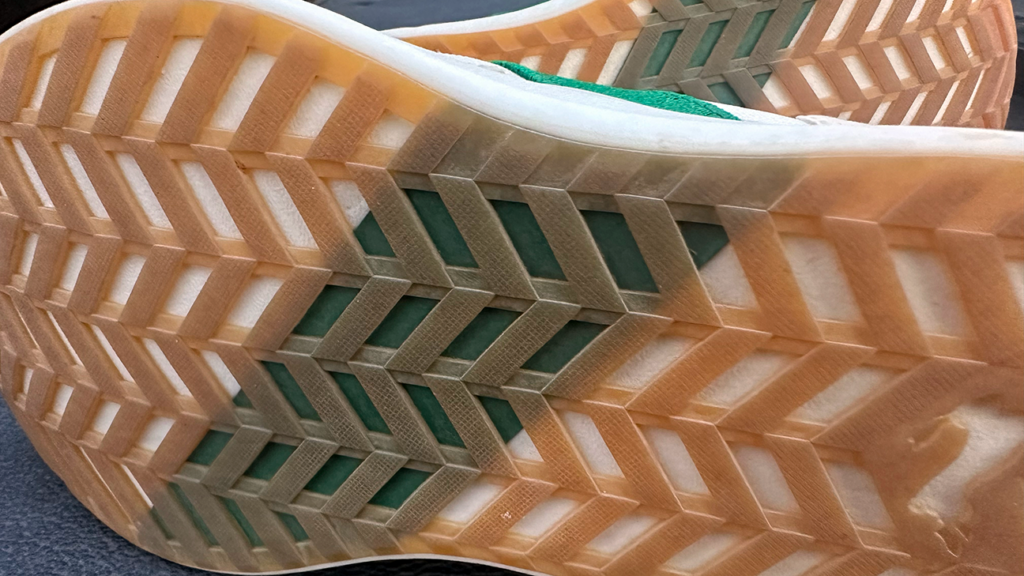
Pros: The outsole’s web of durable gum-rubber material provides sufficient traction on dry and wet surfaces, but it also helps shave the weight. It’s not a sticky rubber surface that you might find on a trail running shoe, but it holds its own on paved or concrete surfaces and provides decent traction on gravel roads.
Cons: It’s not a lightweight shoe, although compared to other shoes in this category weight isn’t a huge detractor. Biggest flaw: The laces are long—bordering on annoyingly long.
Contributing editor Brian Metzler is the Content Director for UltraSignup.com, who has raced every distance from 5K to 100 miles. He has wear-tested more than 2,000 running shoes and is the author of “Kicksology: The Hype, Science, Culture and Cool of Running Shoes” (2019) and “Trail Running Illustrated” (2021). He has raced just about every distance from 100 meters to 100 miles, but he’s most eager to share stories about his experiences pack burro racing in Colorado and riding trains to run trails in Chamonix, France.
RELATED: ASICS Novablast 6 Blends Soft Cushion and Increased Energetic Pop
RELATED: The Hoka Clifton 11 Serves Up a Smoother, More Refined Ride
RELATED: The 5 Best Shoes for Fall Marathon Training This Summer
RELATED: The Adidas Hyperboost Edge Pairs High-Stack Cushion with A Lively Vibe
RELATED: The Saucony Triumph 24 is a Fun, Light and Springy Training Wonder
RELATED: The On LightSpray Cloudmonster 3 Hyper is an Enticing Laceless Trainer
RELATED: Mount to Coast C1 is the Speedy New Kid on the Block
RELATED: The 7 Best Nike Running Shoes on Sale Right Now