44 Best Amazon Prime Day 2026 Deals for Runners
Amazon Prime Day 2026 Starts Now – Here are the 44 best deals for runners Any other week of the year, we’d encourage you to check out your local run…


Before we get into this, a disclaimer: keep doing what your dentist tells you to do.
We’re not here to give medical advice, and it’s not a call to stop flossing. If anything, the opposite. Flossing is cheap, fast, and easy to do. Many dentists recommend it for a reason, and there’s little downside for most people.
What we want to shed light on, however, is how some health coverage stretches the evidence – especially when it comes to big claims about flossing’s impact on longevity, Alzheimer’s disease, and cardiovascular risk.
We want to help you find the most effective and proven longevity tips to extend your lifespan. Recently, flossing has been dubbed the next great longevity hack, but does the evidence support the claims?
A recent article from SELF discusses how flossing may reduce the risk of conditions like Alzheimer’s disease, stroke, and cardiovascular disease – and even states that one study showed that “never flossing increased mortality risk by 30% compared to flossing daily.”
Depending on how you interpret that statement, you could come away with some unwarranted conclusions. The most important thing to get straight here is that the study didn’t demonstrate causation, so it’s not certain the flossing itself is what makes us live longer. In their own words, the authors of the study wrote:
Although not establishing a cause and effect relationship between mortality and dental status and behaviors, these strong and statistically persistent associations of dental health and mortality provide another basis for encouraging oral health and hygiene and use of dentures.
The data showed a statistical association between flossing and longevity, but publications often misrepresent that as a direct lever for increasing your lifespan.
We see a similar pattern with claims regarding cognitive decline. The SELF article cites another study of older adults which found that regular flossing and dental visits were associated with a lower predicted five-year risk of developing Alzheimer’s disease. Specifically, the data showed that people who flossed had 32% lower odds of falling into a high-risk category. While those numbers sound promising, they rely on observational data highlighting a correlation.
To understand if poor oral health directly causes cognitive decline, we have to look at the broader landscape of research. A 2023 systematic review analyzed 1,962 studies to evaluate this exact mechanism. The researchers identified a plausible biological pathway – specifically, that poor oral health drives neuroinflammation – yet ultimately concluded there is insufficient evidence to prove a causal link between the two.
When evaluating any claim that a specific daily behavior makes you live longer, you should ask – Does the behavior itself cause the increase in longevity, or do people who exhibit the behavior just have better access to healthcare or better health habits in general?
People who floss daily often share a cluster of health-promoting behaviors, and without a meticulously designed study, it’s hard to pin down which factor actually makes the difference. Researchers refer to this as the healthy user bias. While statistical models try to adjust for sociodemographic and medical factors, residual bias can still impact observational studies. The broader, harder-to-measure lifestyle of the people who floss continues to influence their overall risk scores, making it difficult to credit the behavior itself for the longevity boost.
In other words: flossing might be correlated with lower risk because flossers tend to do a lot of other beneficial things.
Yes, but it’s complicated. There’s a growing body of research linking oral health, especially periodontal disease, to systemic inflammation.
Some proposed pathways:
The aforementioned literature review from The Journal of Prevention of Alzheimer’s Disease found possible associations, but also concluded there is insufficient evidence to prove a causal link between oral health and Alzheimer’s disease.
That’s where things stand today: biologically plausible, not yet established.
Probably. Here’s a practical way to think about it:
That’s enough to justify doing it – especially if your dentist recommends it.
What it doesn’t justify, however, is treating flossing like a proven lever for longevity. Flossing probably reduces your mortality risk and rate of cognitive decline, but it’s less clear cut and impactful than fundamental building blocks like healthy diet, exercise, and sleep habits.
If you aren’t on a regular flossing routine already, this could be your sign to pick up some Oral-B floss packs or floss picks. If you really want to up your oral hygiene, the COSLUS Water Dental Flosser is an affordable and effective option.
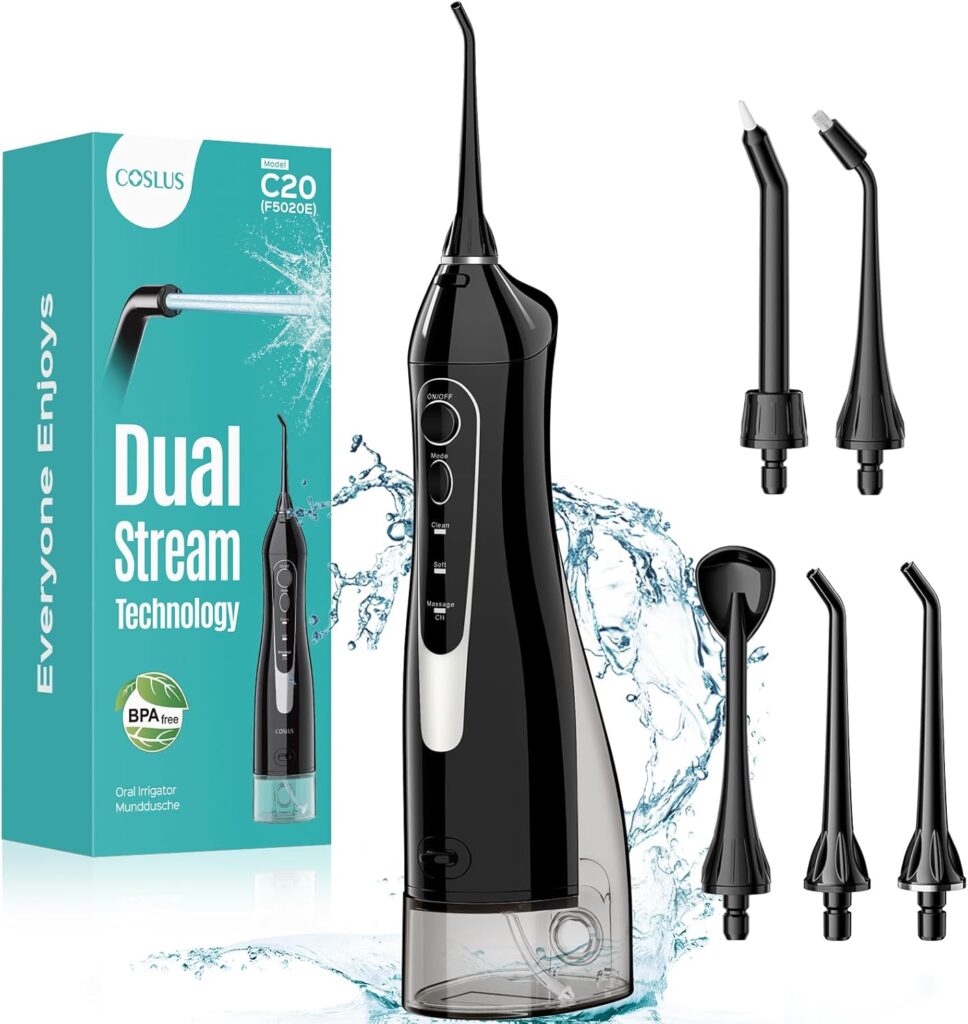
(Disclaimer: These are affiliate links, meaning at no additional cost to you, Six Minute Mile will earn a commission if you click through and make a purchase.)
If you’re already running, riding, or training consistently, you’re working with interventions that have strong evidence behind them. Flossing might be worth adding to the stack, since it’s cheap, easy, and highly recommended by dentists.
When you see a headline claiming that a single habit significantly reduces your risk of Alzheimer’s or adds years to your life, you should ask the question: Are they demonstrating causation, or just correlation? That one filter will take you a long way in separating signal from noise.
Navigating AI Health Advice for Runners: What the Data Shows
Tests and tips to improve longevity
Simple strategies for improving longevity
VO2 Max Unveiled – What This Key Metric Says About Your Fitness and Longevity