The Rabbit EZ Chaser is a Soft, Easygoing Shoe for Easy Miles
The Rabbit EZ Chaser is proof an apparel company can make top-tier running shoes.


In case you missed them, we’re bringing you the most-loved stories from the last month. Friends don’t let friends skip important running advice. Cheers!
Last month, we mentioned our new reader survey, and many of you have already responded with kind words and ideas for what you’d like to see more of. Thanks for taking the time. The survey is open to new and longtime readers alike, every question is optional, and it’s a chance to help steer what shows up in SMM. Several requests already caught our eye, with one reader asking us to explore running through menopause. According to “How to Train Through Menopause,” hormonal changes can affect energy, sleep, temperature regulation, and recovery, so some runners may benefit from extra recovery and adjustments to their weekly schedule. Experts in the story also recommend maintaining heavier strength work, short sprints, and approachable plyometrics to support muscle, bone, and tendon health. Older runners face some related challenges. “Aging as a Runner – Tips for Dealing with the Inevitable” notes that VO2 max, muscle mass, strength, and flexibility tend to decline with age. That’s all the more reason to steer into the skid with regular faster running and strength training, along with enough recovery to keep doing both consistently. We also heard from cyclists wondering how much running advice applies to them. The answer is; quite a bit. If you’re a fan of one sport and want to pair it with the other, “How do I Combine Cycling and Running in my Training Programme?” has a few suggestions. Consider choosing a priority sport, adding the secondary activity gradually, and viewing training load across both sports rather than piling extra sessions onto an already full schedule. If you want to develop both, extending your training cycle to 10–14 days can create more room for each. Once again, thanks to everyone who’s already filled out the survey. We love connecting with the SMM community, and if you want to help us make it better than ever, consider submitting your own response if you haven’t already!
#RunItByUs
Runners spend a lot of time trying to move faster, so there’s something appealing about strength work that asks you to stay put. According to “The Anti-Movement Core Routine Every Runner Needs,” a 12-week study found that both dynamic and anti-movement core programs improved neuromuscular efficiency, but they saw greater gains in the anti-movement group, especially in the deep muscles that stabilize the spine before your limbs move. That’s important for runners because excess trunk motion can hurt running economy and increase impact forces. The article recommends training your core to resist movement with front planks, bridge holds, side planks, and Pallof presses. A related video from @doctor_evans_running points to another study in trained runners that compared traditional bodyweight strength work, plyometrics, and max-intent isometrics. If you need a reminder, max-intent isometrics are stationary pushing and pulling efforts like a leg press done as hard as you can for a few seconds. After the isometric protocol, runners averaged 18 seconds faster over a 2.4K time trial, compared with 14 seconds after plyometrics, and they also produced higher peak forces. The protocol itself was quick and easy, consisting of three sets of two-second maximal pulls for a quarter squat and calf raise. “Can Isometric Training Increase Strength?” helps explain the appeal. Isometrics can recruit lots of motor units, build force at specific joint angles, and place relatively little stress on joints because they require essentially no range of motion. That helps develop the stability and stiffness that can improve your running efficiency. Additionally, lower-effort isometrics are especially useful in rehab settings, since they allow you to train in a fixed position and range of motion.
#HoldYourGround
Our global HQ sits a short distance away from Heartbreak Hill on the Boston Marathon course. For years we believed that the legendary climb hit so hard because it’s positioned at mile 20 of the course, just when your body’s stored fuel runs out. This new story opened our eyes to the idea that technique and form may have just as much to do with cresting the hill as your GU packets: “The Biomechanics Of Hitting the Wall: It’s Not Just About Glycogen.” The story cites a study which tracked 297 runners across 58 marathons and found that those who slowed sharply late in the race showed measurable changes in their mechanics, including shorter strides, longer ground-contact times, lower cadence, and reduced vertical stiffness. In other words, the legs appeared to lose some of their spring-like behavior as fatigue accumulated. That doesn’t mean you should consciously lengthen your stride when the wheels start coming off. The authors point instead toward conservative early pacing, progressive long runs, strength training, and practiced carbohydrate intake to help preserve your normal mechanics deeper into the race. Form is important, but that’s not to say you can forget about fueling strategy. Our recent story, “How to fuel for every race distance,” notes that recommendations for mid-race carbohydrate intake vary widely. We’ve seen suggestions everywhere from 10 to 140 grams per hour, so training is the time to experiment with amounts and sources your stomach can tolerate. Elite runners may push that ceiling much higher, according to: “The fueling science behind the first sub-two-hour marathon.” The story describes Sabastian Sawe taking in 115 grams of carbohydrates per hour after specifically training his gut for that load. For most runners, avoiding the wall may require protecting both sides of the equation – enough fuel to keep producing energy and enough muscular durability to keep putting that energy into the ground efficiently. It helps to have a shoe well-suited to long distances well, which is why in his review, Brian Metzler recommended Tracksmith’s Eliot Ryder (for Men and Women) as a great high-mileage workhorse shoe.
#BeyondTheWall
The City That Never Sleeps will be even more awake than usual on Halloween weekend this year. We love the energy of the NYC Marathon, but for runners and spectators alike, it is not the simplest event to navigate with crowds and street closures. On top of that, the course has been altered this year for the first time in 15 years: “The New York City Marathon Route Is Changing. Here’s What’s Different.” Luckily, Believe in the Run shares their inside scoop in this new piece: “Our Insider Guide to Running The New York City Marathon (2026).” They cover everything from the app and expo to race-morning transit, fueling, pacing, spectator plans, and the long post-finish walk out of Central Park. Once the practical stuff is handled, you can dial in your “real” race day goals by referencing this story from Outside: “6 Marathon Race Day Goals That Have Nothing to Do With Time.” The author argues that a PR or BQ should take a back seat to goals that can actually enrich your experience. Focus on things you control more directly, like starting conservatively, sticking to your fueling plan, encouraging other runners, getting a race photo you actually like, or staying present enough to remember the experience. Des Linden knows something about that approach – in the article, she notes that heading into the 2018 Boston Marathon, she loosened her expectations and focused on having a good experience – then became the first American woman to win in 33 years. You can still keep the watch, just give yourself more than one way to have a successful day. We’ve been thinking along similar lines in “Should you train by power, not pace, when running uphill?” Power lets pace change with the terrain as you target a steadier effort, and RPE can fill the gap when steep trails make watt estimates less reliable. Whether you’re racing five boroughs or grinding up one hill, effort and experience can tell you plenty that the clock can’t.
#NoTimeLikeThePresent
Here’s a fascinating idea to think about – but don’t think too hard if you’ve got a run coming up! Apparently, tiring your brain out can exhaust your legs too. According to “When the brain gets tired, endurance suffers,” researchers had 18 participants either complete an hour-long cognitive test, or passively watch a documentary before cycling at 80% of maximal aerobic power. After the mentally demanding task, participants demonstrated about an 11% shorter time to exhaustion, despite showing no significant difference in leg-muscle activation. The researchers say that changes in perceived effort are a likely explanation: mental fatigue can make sustained exercise feel harder, causing you to reach your limit sooner. The good news is, shorter anaerobic efforts appear less susceptible. Previous work from the same team found no decline in maximum force, power, or speed after prolonged cognitive effort, so a short, intense session may be a better option than a long endurance workout on days when your brain is cooked. You don’t have to keep physical and mental stress completely separate, either. “Brain endurance training” deliberately combines the two as a way to build tolerance, though the researchers recommend minimizing heavy cognitive work before a competition where endurance performance is the priority. Either way, good sleep gives both systems a chance to recover. As we covered in “Control bedroom noise for better recovery,” sleep deprivation may hurt endurance, reaction time, mood, and energy. For noise-sensitive sleepers, Ozlo Sleepbuds 2 can help block and mask disruptive sounds so your brain and body can actually call it a night.
#MindYourMileage
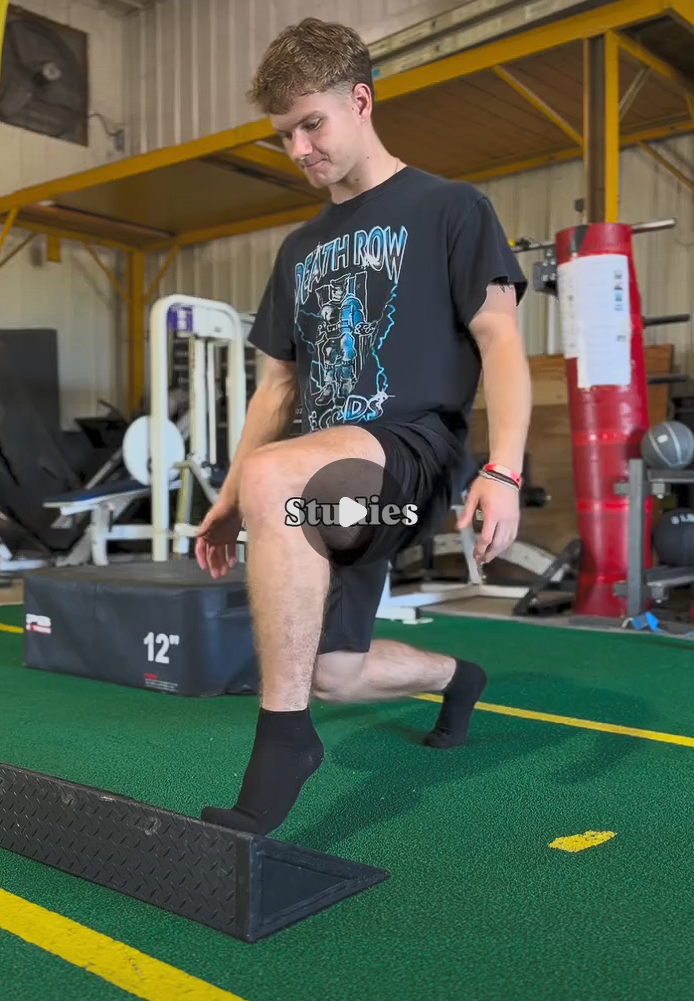
Many experts say that fundamentally, running is just a series of repeated single-leg hops. So it makes sense that improving your springiness with plyometric and isometric exercises could pay off on the run. In @garagestrength’s latest video, he demonstrates a few of his simplest exercises for improving jumping ability. Raised calf holds and elevated heel hops target ankle stability and elasticity, helping you absorb force and recycle energy more effectively with each stride. Consider it a tune-up for the springs in your step.