The Refined Saucony Endorphin Speed 6 Blends a Bouncy Vibe with Comfort and Versatility
The Saucony Endorphin Speed 6 is a semi-firm, bouncy and versatile daily training shoe.

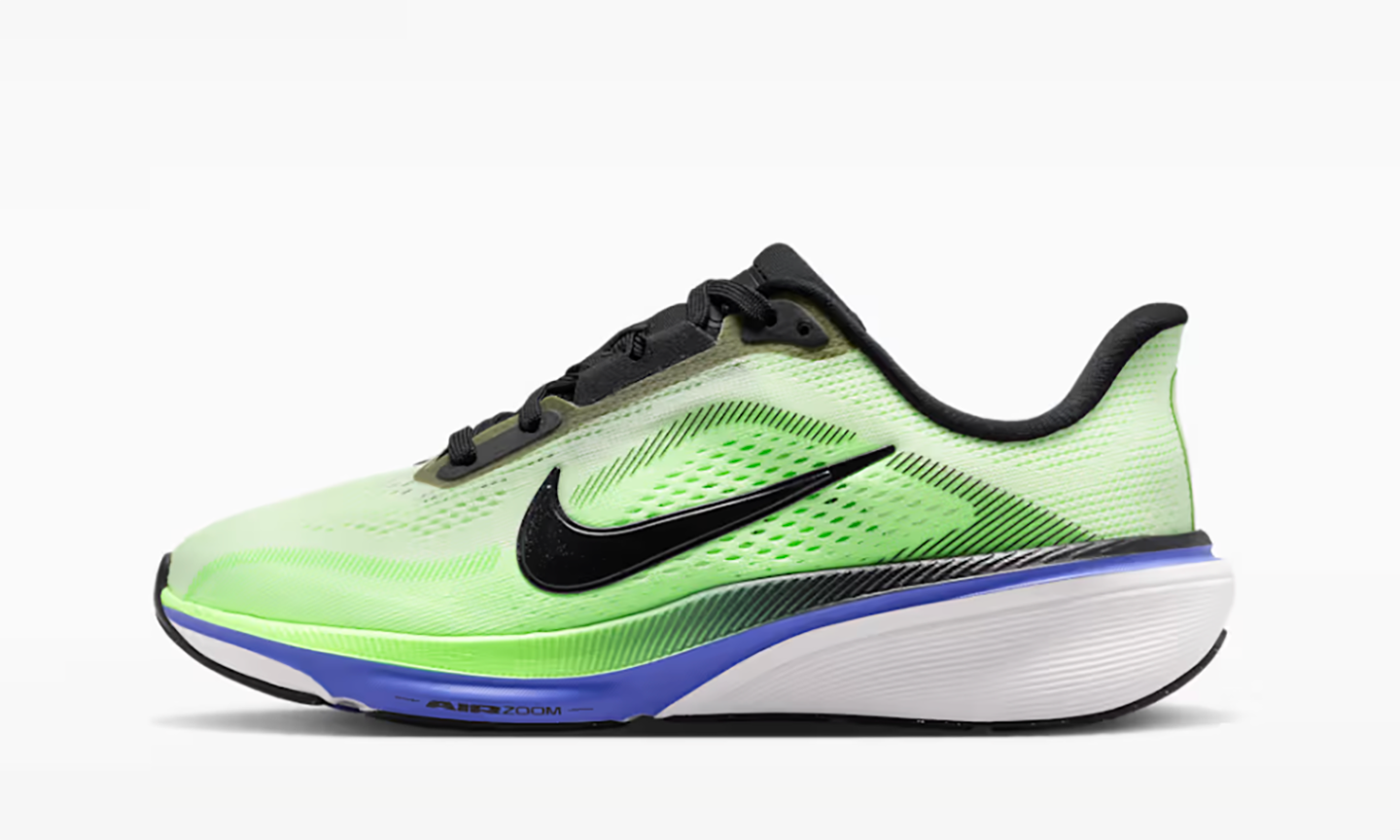
The Nike Pegasus 42 has undergone meaningful changes to make it more versatile and propulsive.
In the world of running shoes, few names carry the weight of legend quite like the Nike Pegasus.
Born in 1982, this iconic model has laced up the feet of generations of runners—from wide-eyed beginners taking their first tentative steps on pavement, to seasoned marathoners grinding through pre-dawn training blocks. Decade after decade, the Pegasus has endured where countless rivals have faded, quietly accumulating a legacy that has made it the best-selling running shoe of all time. It is not a shoe that shouts. It is a shoe that shows up—reliably, consistently, mile after mile, year after year.
What makes the Pegasus story so interesting is the way it has evolved. Each edition has nudged the franchise in a subtly different direction—sometimes leaning into stability, sometimes chasing lightness, occasionally flirting with lifestyle appeal before returning to its roots.
In part because it’s a shoe that Nike has its newest designers work on, there have been highs and lows across those four decades—versions that runners cherished and versions they quietly forgot. But through every iteration, the core promise remained intact: a dependable, honest workhorse of a running shoe that any runner, at any level, could trust to carry them through their training. That consistency, more than any single technological leap, is what transformed the Pegasus from a product into an institution.
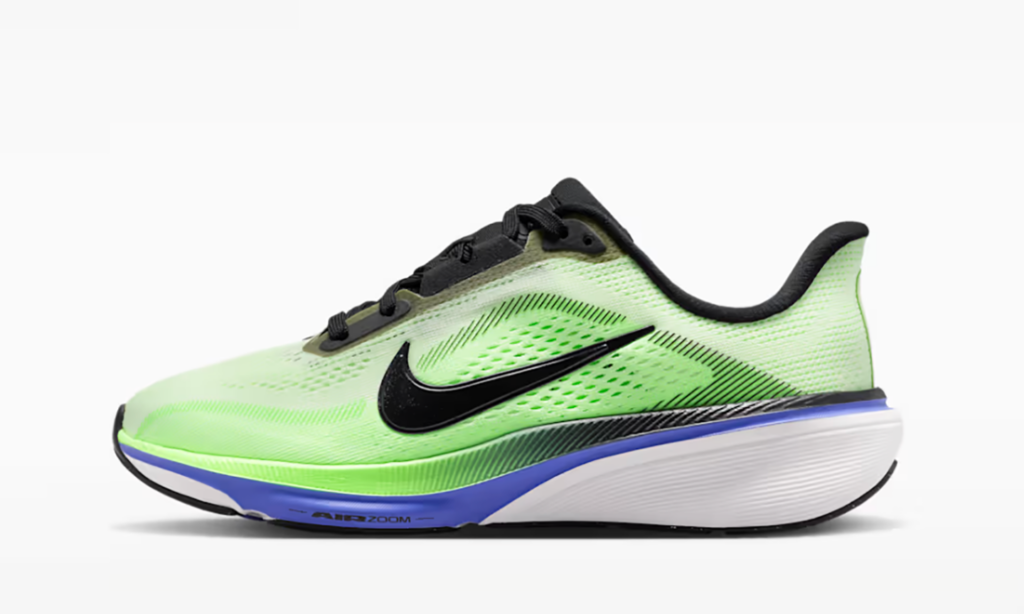
So how is the newly launched Pegasus 42 different? A new full-length curved Air Zoom unit brings a more propulsive, modestly energetic ride that feels unlike any standard Pegasus before it. (The short-lived Pegasus Turbo shoes, circa 2019, was livelier and lighter, but it was more of a performance trainer than an everyday trainer.) The Peg 42 also has a roomier, more anatomical fit, which means the shoe finally works with a greater range of foot shapes. (Yes, it has finally shed that classic snug Nike fit!)
Based on my initial 45 miles running in it, the recently dropped Pegasus 42 feels like it has undergone meaningful changes—not a reinvention, but a refinement—with a better fit and a slightly more energetic vibe.
Price: $145
Approximate Weights: 8.8 oz (women’s 8); 10.1 oz. (men’s 9)
Heel-Toe Offset: 10mm; 37mm (heel), 27mm (forefoot)
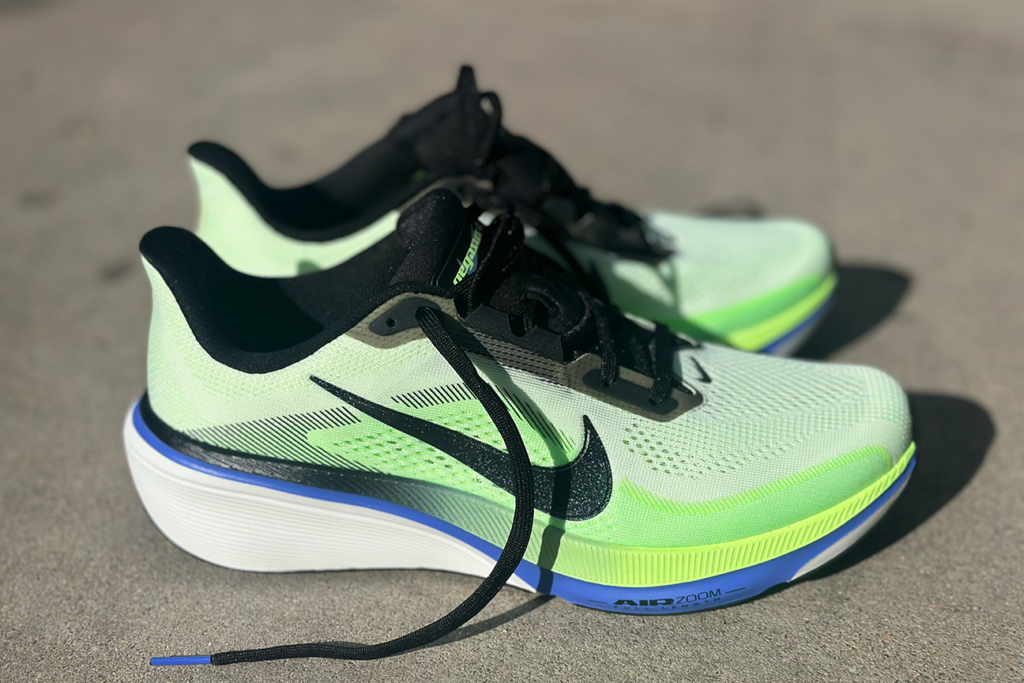
What’s New: The most notable update is a completely redesigned midsole built around a curved, full-length Air Zoom unit. The arc-shaped design mirrors the geometry used in Nike’s top-tier road racing shoes, helping create a smoother, more fluid transition from heel strike to toe-off. An updated fit provides more room in the forefoot and toe box, while the ReactX foam midsole is 13 percent more responsive than previous React formulations. The slightly wider toe box also allows your foot to splay and expand naturally during longer runs.
Fit/Feel/Ride: The Pegasus 42 fits true to size with a medium/narrow interior volume and a tapered toe box that is marginally wider than previous models. It’s not as snug in the forefoot as a lot of the previous editions, but it’s not exceptionally accommodating, either. Like the Pegasus 41, this edition has a fully gusseted tongue that forms an interior bootie construction and a sock-like fit, which is great. The step-in sensation feels above average to good, with just enough padding in the tongue and heel collar to keep it from feeling sparse. The new, lightweight, breathable mesh upper conforms more closely and seamlessly to the foot, thanks to a refined midfoot band that helps secure a wider range of arches.
Compared to the previous version, Nike says the Pegasus 42 offers 15 percent greater energy return, and that’s apparent the moment you lace them up and start running. The pairing of ReactX foam and a responsive Air Zoom unit gives the Nike Pegasus 42 a ride that feels both familiar and engaging underfoot, delivering a slightly more comfortable and energetic ride that straddles the line of being semi-firm and semi-soft with a more dynamic toe-off sensation.
Why It’s Great: The Pegasus 42, like previous editions going back more than 40 years, is great because it’s a good and competent everyday training shoe for a good price. The new edition has a $5 price hike, but the updates are meaningful, so it’s more equipped to be a do-everything workhorse shoe for a novice runner or fitness runner. It’s a very good shoe, but you might have to couch your expectations because it feels different than a lot of shoes you might have worn recently.
Why You’ll Love It: The shoe has a lively character—you can distinctly feel the full-length Air Zoom unit working beneath you, adding a subtle boost of energy to each stride. The toe-off feels a bit more dynamic, helping you settle into a steady rhythm with less perceived effort. It’s reminiscent of the propulsive feel found in plated racing shoes, though in a more everyday-friendly form. Its lower-to-the-ground forefoot vibe allows for greater pace variability—I loved it for a Zone 2 to Zone 4 runs—but its lack of high-loft hyper-responsive cushioning compared to modern training and racing shoes limits its long-haul comfort.
The extra pep makes it more versatile to both novice and more advanced runners who might choose this shoe for speedier midweek workouts like tempo runs and fartlek-style intervals. The best part is that it’s livelier, but it doesn’t sacrifice stability or durability—two of the hallmarks of the Pegasus through the years.
Why You Might Not Like It: Compared to other everyday trainers, the ride can feel semi-firm, especially in the latter miles of longer runs. There is softness in the heel, but the ride feels more firm as you roll to the forefoot. Ultimately, it’s a different sensation than most of the bouncy everyday trainers out there. Plus, the shoe is actually a smidge heavier than the previous edition.
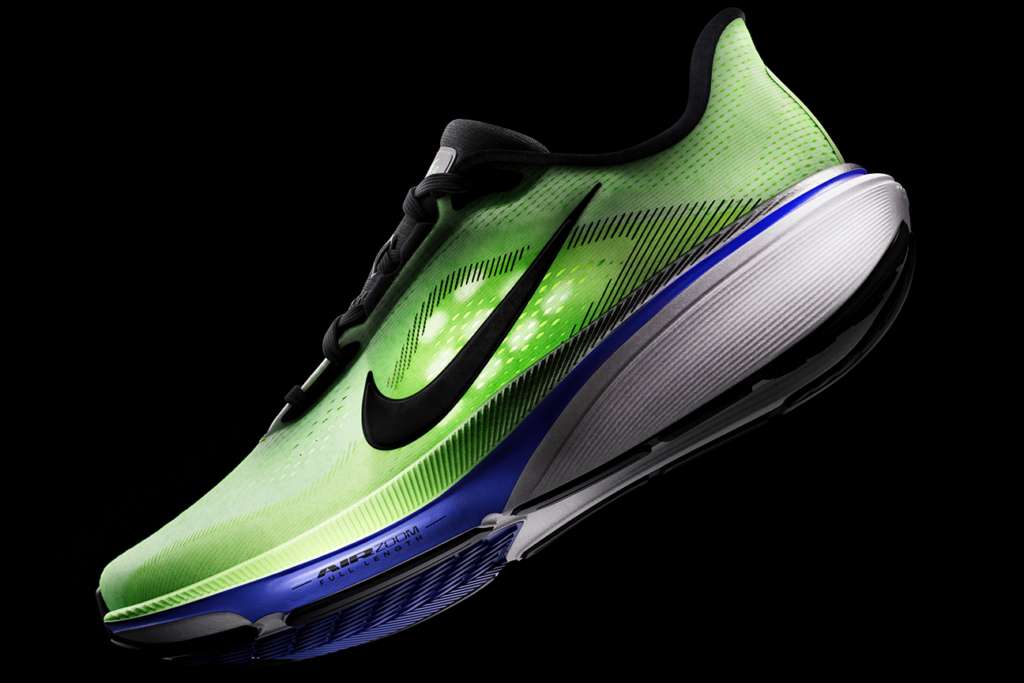
Pros: The outsole has been redesigned with more strategic coverage and flex grooves. Plus, the Pegasus has always been available in numerous colors, and this year’s edition is no different.
Cons: It’s a good shoe, but it’s limited, too. It’s a reliable daily trainer, but runners interested in logging faster paces or longer miles may find it lacking compared to newer, more feature-rich options in the same or similar price range.
About the Author
Contributing editor Brian Metzler is the Content Director for UltraSignup.com. He has wear-tested more than 2,000 running shoes and is the author of “Kicksology: The Hype, Science, Culture and Cool of Running Shoes” (2019) and “Trail Running Illustrated” (2021). He has raced just about every distance from 100 meters to 100 miles, but he’s most eager to share stories about his experiences pack burro racing in Colorado and riding trains to run trails in Chamonix, France.
RELATED: 4 Great Running Shoes on Sale Right Now
RELATED: The New Balance Ellipse Blends Cushy Comfort and Modern Style
RELATED: 6 Great Super Shoes for Chasing PRs This Spring
RELATED: The Salomon Aero Glide 4 Is a Cushy and Versatile High-Mileage Workhorse
RELATED: The Saucony Endorphin Azura Serves Up a Fun, Stable Ride without a Plate
RELATED: The Enhanced ASICS Superblast 3 is a Stunning Max-Cushioned Super Trainer
RELATED: The New Balance 1080v15 Has Been Revitalized as a Premium Everyday Trainer