The Refined Saucony Endorphin Speed 6 Blends a Bouncy Vibe with Comfort and Versatility
The Saucony Endorphin Speed 6 is a semi-firm, bouncy and versatile daily training shoe.


The New Balance SC Rebel v1 is a versatile, plated super trainer that blurs the line between everyday comfort and race-day tech.
Modern super trainers are built on a simple bet: that a runner shouldn’t have to choose between speed and comfort, using energetic foams and propulsion plates to deliver a ride that feels fast enough to push a workout but cushioned enough to survive the daily miles that come before it.
The New Balance SuperComp Rebel v1 has the ingredients of a modern super shoe—an energetic midsole foam, a carbon-infused plate, and an aggressive geometry—but it doesn’t come across as a stripped-down race weapon. Instead, it occupies that increasingly popular middle ground between everyday training and all-out racing, giving runners a fast, lively ride without the demanding feel of a traditional marathon super shoe.
That versatility is a big part of the SC Rebel’s appeal. It’s designed to pick up the pace, whether you’re running long intervals, tempo miles, or a long run with some faster sections mixed in. The cushioning is substantial enough for regular mileage, while the plate and geometry add a noticeable sense of propulsion when you start pushing the pace. It’s not simply a slower, more comfortable alternative to a carbon-plated racer; it has a personality of its own.
But the SC Rebel isn’t going to work equally well for every runner. The fit is notably snug through the forefoot, and the low-volume shape can be limiting for runners who need more room up front. The unusual plate configuration also gives the shoe a distinct underfoot sensation that may take some getting used to. Those characteristics are part of what makes the Rebel feel different from other performance trainers, but they’re also worth considering before making it your go-to shoe.
After several runs in the SC Rebel, the question isn’t whether it can go fast—it clearly can. The more interesting question is where it fits into a runner’s rotation and whether its combination of responsiveness, stability, and race-day technology makes it compelling enough for more than just occasional speedwork. Here’s how it stacks up in everyday training and faster running.
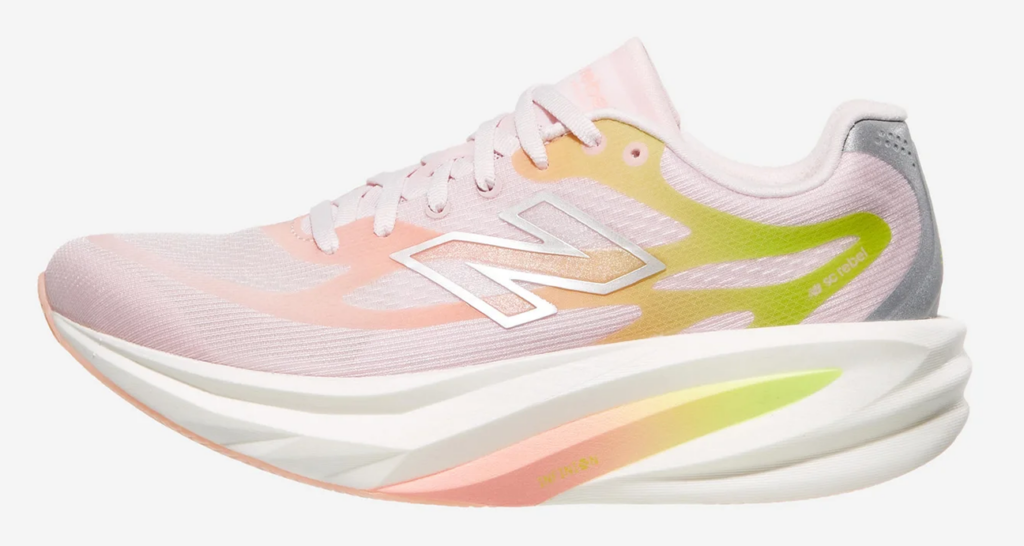
Price: $200 (women / men)
Approximate Weights: 6.4 oz. (women’s size 8), 7.0 oz. (men’s size 9)
Heel-Toe Offset: 4mm; 39mm (heel), 35mm (forefoot)
What’s New: The SC Rebel runs on a full-length Infinion midsole, New Balance’s latest supercritical foam, trading FuelCell’s softer cushioning for a firmer, quicker ride. Its Energy Arc plate splits the job in two: a stable, centered section under the heel, and a more aggressive plate riding low near the outsole up front. The FantomFit upper adds TPU-reinforced mesh and a gusseted tongue for midfoot lockdown without bulk, while the outsole targets rubber to high-wear zones, leaving some forefoot coverage sparse. Overall, it’s less an update to the previous model than a full shift toward New Balance’s newer race-day construction.
Fit/Feel/Ride: The SC Rebel v1 fits true to size, with a secure, lower-volume fit in the forefoot. (It comes in two widths for men and women; I tested the regular width version.) It definitely has a locked-in sensation, thanks to a gusseted tongue that secures the midfoot without unnecessary bulk, and New Balance’s FantomFit technology, which wraps the midfoot and heel confidently so you stay planted and focused even as you push the pace.
Once your foot settles, the heel is where the plush shows up—a soft, absorbent landing under the Infinion foam that feels more forgiving than the locked-down upper suggests. It’s a bit of a split personality right out of the box: race-fit precision on top, cushioned trainer underneath. That contrast is the first thing you notice, before you’ve taken a single stride.
Why It’s Great: Most plated shoes force a choice—soft and forgiving for recovery miles, or stiff and propulsive for workouts—but the SC Rebel’s split-plate design adapts instead: stable and controlled at easy effort, then waking up through the forefoot once you push the pace. The catch is it wants sustained rhythm, not short bursts—tempo work, steady-state efforts, and long runs where the pace builds gradually, not 400-meter repeats. (Mile repeats or a 3 x 3 miles workout are great, though!) That’s where the real training value shows up: for marathon-block work, where one durable, versatile pair can replace two or three specialized shoes in the rotation.
Why You’ll Love It: If you’re the runner who owns one pair of shoes and wants that pair to do everything—easy days, workouts, long runs, and eventually race day—this is one of the strongest arguments in that category this year. The versatility is real. You can log recovery miles in the SC Rebel without feeling punished, then turn around and run a workout in the same pair without feeling like you left performance on the table. I would even recommend this shoe for a marathoner in the 3:30 to 4:30 range, because the combination of cushioning and propulsion will pay off over time.
Why You Might Not Like It: The fit runs snug and low-volume through the forefoot, and it’s not a break-in-and-it’ll-loosen-up kind of snug—it’s a this-last-just-isn’t-built-for-your-foot kind of snug for a meaningful chunk of runners. Try it on before you commit, especially if you’ve had width issues with New Balance’s racing-oriented lasts before.
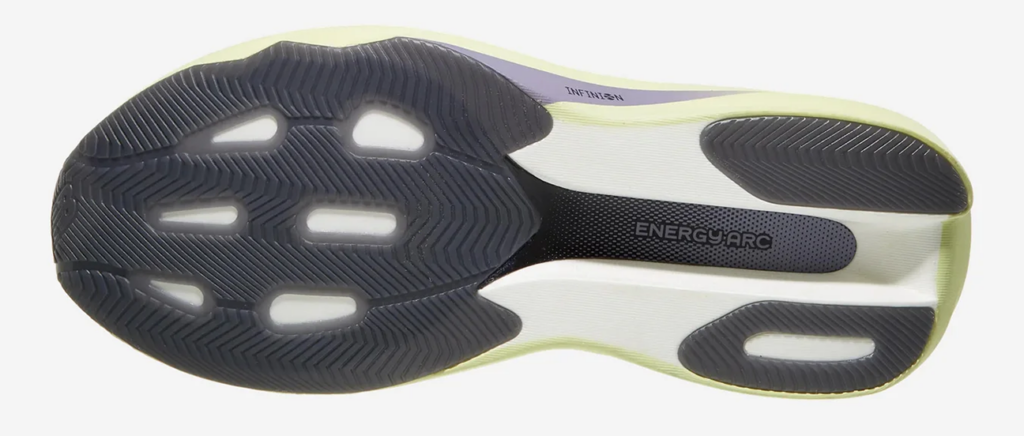
Pros: Rather than sitting mid-stack, the SC Rebel’s forefoot plate rides low near the outsole—delivering snappy toe-off without a stiffer, heavier plate. The foam above stays free to cushion, so the ride stays propulsive without going harsh or plank-like. Propulsion earned through geometry, not stiffness.
Cons: If your training is built around shorter, sharper intervals, this probably isn’t your shoe—and if you’ve got wider feet, the fit alone may rule it out before the ride ever gets a chance to win you over. Its firm, aggressive ride feels less forgiving at slower paces, and with limited forefoot rubber, durability could be a concern too.
Contributing editor Brian Metzler is the Content Director for UltraSignup.com, who has raced every distance from 5K to 100 miles. He has wear-tested more than 2,000 running shoes and is the author of “Kicksology: The Hype, Science, Culture and Cool of Running Shoes” (2019) and “Trail Running Illustrated” (2021). He has raced just about every distance from 100 meters to 100 miles, but he’s most eager to share stories about his experiences pack burro racing in Colorado and riding trains to run trails in Chamonix, France.
RELATED: Altra’s Speedy Vanish Carbon 3 Goes Mainstream with a Split Carbon Plate
RELATED: Tracksmith Eliot Ryder Serves Up Smooth, Stable Springiness
RELATED: The Saucony Paramount Max is a Soft, Bouncy, Stable and Fun Daily Trainer
RELATED: Nike Pegasus 42 Continues its Workhorse Legacy with a More Responsive Ride
RELATED: ASICS Novablast 6 Blends Soft Cushion and Increased Energetic Pop